

What Happened In Brief
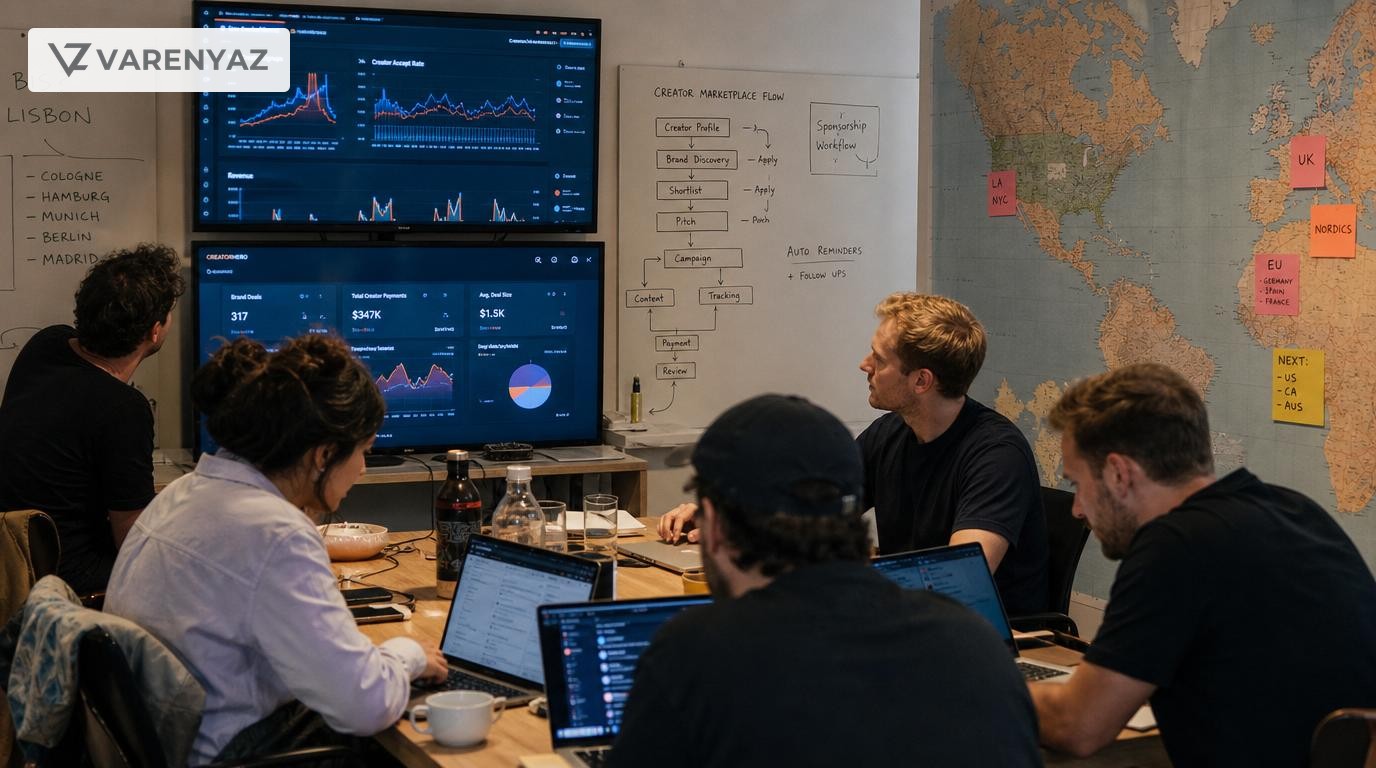
Passionfroot, a German startup building a B2B creator marketplace, has raised $15M in Series A funding led by Insight Partners to drive its expansion into the US market. The platform focuses on professional creators and brands, streamlining sponsorships and campaign workflows. For marketing leaders and product teams, this signals a maturing creator economy where workflow, data, and integrations matter as much as reach. The move also creates opportunities for martech, CRM, and AI-powered tooling to plug into a rapidly formalizing brand-creator collaboration stack.
News Desk
LiveEditorial Review
VarenyaZ Editorial Desk, Managing Editor
Global
In This Story
Coverage Signals
Key Takeaways
- Passionfroot raised $15M in Series A funding to expand its B2B creator marketplace into the United States.
- The platform targets professional creators and brands, focusing on sponsorship workflows, campaign management, and monetization infrastructure.
- Insight Partners led the round, signaling institutional belief that the creator economy now requires robust B2B software, not just social reach.
- For brands and agencies, Passionfroot-type tools promise clearer pipelines, performance data, and repeatable processes for creator collaborations.
- US expansion puts Passionfroot into direct competition with established influencer marketing platforms and agency networks.
- Product and engineering leaders should expect deeper integrations between creator platforms, CRM, analytics, and marketing automation tools.
- Risks include marketplace fragmentation, regulatory scrutiny around sponsorship transparency, and platform dependence on social networks’ policies.
- Companies can leverage similar architectures and AI workflows to build niche B2B marketplaces or creator tooling with partners like VarenyaZ.
Passionfroot raises $15M to take its B2B creator marketplace to the US
Passionfroot, a German startup building a B2B marketplace for professional creators and brands, has raised $15 million in Series A funding to accelerate its expansion into the United States. The round, led by growth investor Insight Partners, underscores how quickly the creator economy is maturing from ad hoc influencer deals into structured, software-driven infrastructure.
For founders, CMOs, and product leaders, this is more than another funding headline. It is a signal that creator collaborations are being re-architected as a repeatable, trackable workflow that needs the same discipline as any other marketing or sales process.
What Passionfroot does in the creator economy stack
Passionfroot’s core proposition is simple: make it easier for professional creators and brands to work together using tools that look and feel like modern B2B SaaS.
Instead of creators juggling email threads, DMs, spreadsheets, and one-off contracts, the platform aims to centralize:
- Inbound and outbound sponsorship opportunities
- Campaign briefs and deliverables
- Pricing, inventory, and availability
- Approvals, contracts, and payments
- Campaign analytics and performance reporting
On the brand side, marketing and partnership teams can treat creator relationships like a pipeline: track stages, forecast spend, and compare performance across channels and creators. This mirrors how sales teams use CRMs or how growth teams use attribution platforms.
By positioning itself as B2B infrastructure rather than a pure discovery marketplace, Passionfroot is targeting a growing segment of full-time creators and scaled marketing teams who care about process efficiency and data, not just reach.
Direct answer: why this $15M raise matters for businesses
Passionfroot’s $15M funding round matters because it confirms that the creator economy is moving into a professional, SaaS-powered phase. Brands and agencies will expect standardized workflows, measurable ROI, and tight integration with their existing martech stack. For businesses, this means treating creator partnerships like a structured channel—supported by automation, data, and integrations—rather than experimental spend.
Why the US expansion is strategically important
The United States remains the largest and most commercially mature creator market. It combines a concentration of global brands, media buyers, and high-earning creators with a crowded but still fragmented tooling landscape.
By entering the US now, Passionfroot is likely aiming to:
- Win share among professional creators who already treat content as a business.
- Partner with brands and agencies seeking more predictable, trackable creator campaigns.
- Differentiate from influencer platforms that focus on discovery but under-serve workflow and operations.
- Build integrations with US-centric tools such as major CRMs, ad platforms, and accounting systems.
For US-based startups and enterprises, this is also a proof point that creator operations will increasingly sit alongside email, paid media, and lifecycle as a core, systematized marketing function.
Business impact: what leaders should be evaluating now
As Passionfroot and similar platforms scale, several practical decisions move onto leadership agendas:
1. From ad hoc deals to structured creator operations
Brands that rely on spreadsheets and manual outreach risk being out-executed by teams that run creator relationships with CRM-like discipline. That means:
- Defining clear funnels for creator discovery, qualification, and onboarding.
- Standardizing sponsorship products (for example, newsletter slots, podcast mid-rolls, UGC bundles).
- Agreeing on performance metrics beyond vanity reach—like attributed sign-ups, trials, or revenue.
2. Integrating creator data into the broader martech stack
Creator channels no longer sit in isolation. Mature teams will:
- Push creator campaign data into analytics platforms for multi-channel attribution.
- Sync audience and lead data into CRMs where possible and compliant.
- Use AI models to predict which creator categories, formats, or messages drive the right downstream outcomes.
3. Rethinking product and GTM opportunities around creators
For SaaS founders and product leaders, Passionfroot’s funding is a signal of white space in verticalized workflows. There is room to build:
- Niche creator marketplaces focused on specific industries (B2B SaaS educators, fintech experts, developer advocates).
- AI tools that assist with pricing, brief generation, and content-performance prediction.
- Middleware that connects creator platforms to billing, tax, and compliance systems.
These products will require robust web applications, API-first design, and secure data architectures—areas where partnering with experienced engineering teams becomes critical.
AI, search, and software angles: where this is heading
The next phase of creator infrastructure will be heavily AI- and data-driven, with several likely directions:
- Smart matching and pricing: Models that match brands with creators based on audience, content style, historical performance, and budget, while dynamically recommending rates.
- Automated operations: Workflows that generate draft briefs, content calendars, and usage rights terms based on past campaigns and playbooks.
- Searchable creator knowledge graphs: Structured data linking creators, topics, audiences, and outcomes, powering more intelligent discovery and campaign planning.
- Compliance automation: Systems that flag missing disclosures, track jurisdiction-specific regulations, and log audit trails for paid partnerships.
To support this, platforms like Passionfroot—and companies building around them—will need scalable backends, clean data models, and thoughtful UX that hides complexity from creators and brand managers.
If you are exploring how to build similar B2B marketplaces, creator tools, or AI-powered campaign workflows, you can discuss a tailored architecture and product strategy with VarenyaZ at https://varenyaz.com/contact/.
Risks, constraints, and open questions
Despite the momentum, there are real risks leaders should weigh.
1. Platform dependence on social networks
Creator marketplaces are inherently exposed to the policies and algorithms of platforms such as YouTube, Instagram, TikTok, X, and LinkedIn. Changes in API access, content rules, or recommendation systems can affect a creator’s reach—and therefore the attractiveness of campaigns managed through Passionfroot or its peers.
2. Regulatory and compliance pressure
Regulators in the US, UK, EU, and India are increasingly focused on advertising transparency, children’s privacy, and financial disclosures. B2B creator platforms will need robust systems for:
- Ensuring proper labeling of paid partnerships.
- Respecting regional data privacy regimes.
- Logging consent and handling deletion or access requests.
Businesses that rely on creator channels without adequate compliance tooling risk reputational and regulatory fallout.
3. Market fragmentation and competition
The creator tooling landscape is fragmented—covering everything from link-in-bio tools and newsletter platforms to influencer agencies and programmatic influencer solutions. Passionfroot must carve out a clear niche: likely around professional creators, repeat sponsorships, and workflow depth.
For enterprises, fragmentation means careful vendor evaluation: choosing platforms that integrate cleanly, expose APIs, and won’t lock data into unusable silos.
What happens next: signals to watch
Over the next 12–24 months, leaders should monitor:
- Enterprise wins: Whether Passionfroot secures larger contracts with global brands or agencies, confirming the need for deeper B2B workflows.
- Product roadmap: How quickly it ships analytics, AI assistance, and integrations into CRM, ad platforms, and financial tools.
- Geographic rollouts: Expansion beyond the US into markets like the UK and India, where English-speaking creators and global brands overlap heavily.
- Ecosystem partnerships: Tie-ups with newsletter platforms, podcast hosts, or commerce tools that turn Passionfroot into a hub, not just a destination.
How VarenyaZ fits into this shift
Whether you are a brand, agency, or startup building in the creator economy, the Passionfroot raise highlights the need for solid digital infrastructure:
- Web and product design: Clear UX for creators and managers to understand workflows, inventory, and campaign states.
- Custom web app development: Marketplace logic, role-based access, payments, contracts, and analytics dashboards.
- Automation and integrations: Connecting creator tools into your CRM, billing, and data warehouse.
- AI development: Smart matching, pricing assistance, and content performance prediction tuned to your niche.
VarenyaZ works with companies to design and build these systems end-to-end—from concept and UX through architecture, APIs, and AI workflows—so that your creator and partnership strategies are backed by robust, scalable software rather than manual patchwork.
As platforms like Passionfroot professionalize creator operations, the competitive edge will go to teams that treat creator channels as an integrated, automated part of their digital stack—something that thoughtful web design, resilient development, and well-implemented AI can unlock.
Editorial Perspective
"The Passionfroot raise is a clear signal that the creator economy’s next phase is less about celebrity endorsements and more about reliable B2B tooling that can plug into the marketing stack like any other SaaS."
"By targeting professional creators and recurring sponsorship workflows, Passionfroot is positioning itself as infrastructure, not a campaign marketplace—a strategic difference that enterprise marketing and product teams should not ignore."
Frequently Asked Questions
What is Passionfroot and what problem does it solve?
Passionfroot is a German startup building a B2B creator marketplace that connects professional creators with brands. It focuses on standardizing sponsorships, partnerships, and campaign workflows, giving creators and marketing teams one place to manage briefs, inventory, deals, and reporting instead of juggling email, spreadsheets, and ad hoc tools.
How much funding did Passionfroot raise and who led the round?
Passionfroot raised $15 million in a Series A funding round reportedly led by Insight Partners. The capital will be used to accelerate product development, scale go-to-market efforts, and support geographic expansion, particularly into the United States, where brand and creator demand for structured collaboration tools is growing quickly.
Why is Passionfroot expanding its B2B creator marketplace to the US?
The United States is one of the largest and most mature creator and influencer marketing markets globally. By expanding to the US, Passionfroot is positioning itself closer to global brands, agencies, and high-earning creators who are seeking more professional, data-driven tools to run sponsorships, manage pipeline, and measure ROI across social and content channels.
How does Passionfroot differ from traditional influencer marketing platforms?
Traditional influencer platforms often focus on discovery and one-off campaigns. Passionfroot positions itself as B2B infrastructure for professional creators and marketing teams, emphasizing workflow automation, repeatable sponsorship products, calendar and inventory management, and tighter integration into existing martech and CRM stacks rather than just campaign matchmaking.
What should brands and startups watch as Passionfroot scales in the US?
Brands and startups should watch how Passionfroot integrates with CRM, analytics, and AI tools, how it handles transparency and compliance in paid partnerships, and whether it can differentiate from existing influencer solutions. It also offers a blueprint for building sector-specific marketplaces and workflow platforms powered by automation and structured data.
Selected References
Stay Ahead
Get concise, actionable insights on AI, digital strategy, and innovation. No spam, just value.
More Coverage
Related News
Jul 21, 2026
Gritt Raises $34M to Deploy Construction Robots for Solar Farms
Robotics startup Gritt has exited stealth with $34 million in funding to automate some of the most dangerous and physically intense tasks on construction sites, starting with utility-scale solar farms. The company is building rugged field robots that handle repetitive, heavy material workflows to reduce labor bottlenecks, cut safety incidents, and accelerate renewable energy deployment. For construction, energy, and infrastructure leaders, Gritt signals a practical shift from lab robotics to jobsite-ready automation that could reshape project planning, workforce strategy, and capital allocation over the next decade.
Jul 20, 2026
Applied Computing Targets Whole-Plant AI Model for Oil & Gas
Applied Computing has raised a $20M Series A round to build a foundation AI model tailored to oil, gas and petrochemical plants. Instead of point solutions for individual assets, the startup aims to model the entire plant, integrating sensor data, engineering diagrams and operational histories. The goal is to improve uptime, reduce energy use, enhance safety and support more accurate decision-making. For operators, this signals a shift toward plant-scale digital twins and unified AI layers that sit on top of existing OT and IT systems, with implications for data strategy and vendor selection.
Jul 19, 2026
Sheryl Sandberg Backs $10M AI Vehicle Inspection Startup
Sheryl Sandberg is leading a $10 million investment in a 2021-founded startup that uses AI and computer vision to detect vehicle damage from smartphone photos. Targeting insurers, fleet operators, rental firms, and mobility marketplaces, the platform aims to cut claims costs, reduce fraud, and standardize inspections without special hardware. For business leaders, it signals rapid adoption of AI-driven, mobile-first inspection workflows across automotive and insurance operations.