

What Happened In Brief
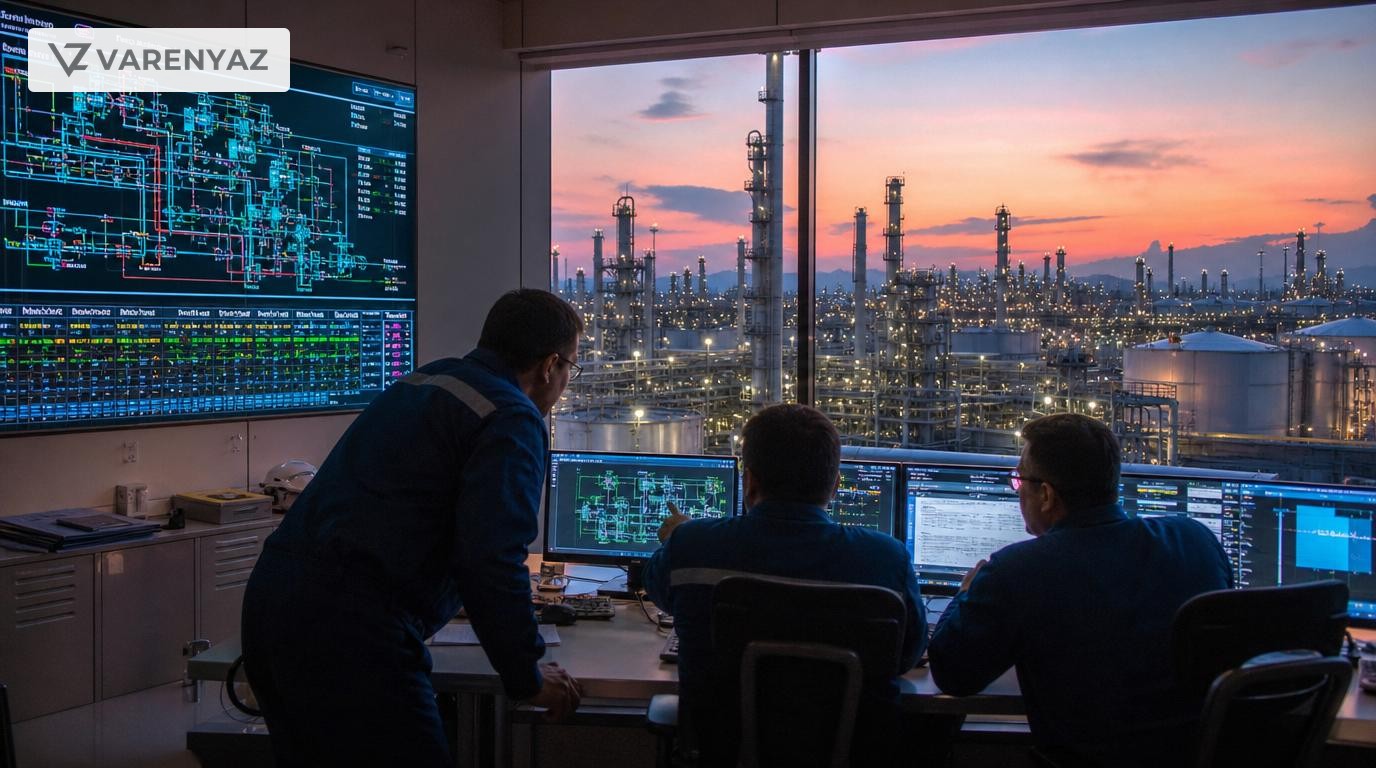
Applied Computing has raised a $20M Series A round to build a foundation AI model tailored to oil, gas and petrochemical plants. Instead of point solutions for individual assets, the startup aims to model the entire plant, integrating sensor data, engineering diagrams and operational histories. The goal is to improve uptime, reduce energy use, enhance safety and support more accurate decision-making. For operators, this signals a shift toward plant-scale digital twins and unified AI layers that sit on top of existing OT and IT systems, with implications for data strategy and vendor selection.
News Desk
LiveEditorial Review
VarenyaZ Editorial Desk, Managing Editor
Global
In This Story
Coverage Signals
Key Takeaways
- Applied Computing raised $20M Series A to build a foundation AI model for oil, gas and petrochemical plants.
- The startup’s goal is to represent the entire plant as a single AI-understood system, not just isolated assets or processes.
- Whole-plant AI models promise benefits in uptime, safety, energy efficiency and yield optimization.
- Success depends on integrating diverse industrial data sources, from sensors to engineering diagrams and maintenance logs.
- Operators must plan for strong data governance, cybersecurity and clear human-in-the-loop controls with plant-scale AI.
- The move reflects a wider industrial trend from point solutions toward digital twins and unified decision layers.
- Vendors that can bridge OT systems with modern AI stacks will gain strategic importance in industrial transformation.
- Energy and manufacturing leaders should pilot domain-specific foundation models while preserving system interoperability and vendor optionality.
Applied Computing raises $20M to build a whole-plant AI model for oil and gas
Applied Computing has raised a $20 million Series A round to build a domain-specific foundation AI model for the oil, gas and petrochemical sector, aiming to represent an entire plant as a single, AI-understood system rather than a patchwork of disconnected assets and tools.
The funding underscores a clear shift in industrial AI: from narrow predictive maintenance and optimization tools to plant-scale models and digital twins that can reason about complex interdependencies across units, utilities and control systems.
What Applied Computing is actually building
Applied Computing’s core idea is straightforward but ambitious. Instead of training models around individual pumps, compressors or heat exchangers, the company wants to ingest and learn from all the data that describes a plant:
- Real-time sensor and historian data from OT systems
- Engineering diagrams and P&IDs
- Maintenance logs and reliability records
- Process setpoints, alarms and control logic
- Production plans, throughput targets and energy data
From there, the startup aims to build a foundation model that understands how the plant behaves as a system under different operating conditions. In practice, that could mean recommendations on:
- How to stabilize operations at higher throughput with lower risk
- Where to adjust conditions to save energy or reduce emissions
- Which assets create systemic risk when they degrade or fail
- How disturbances in one unit propagate into the rest of the plant
The concept borrows from the rise of large language models and multimodal foundation models, but grounds it in process manufacturing physics, operations and safety constraints.
Why this matters for industrial and energy leaders
For business decision-makers in oil, gas and petrochemicals, the implications are significant. If whole-plant AI models work as promised, they could unlock value that piecemeal analytics often miss.
Traditional AI deployments in refineries and chemical complexes frequently stall at the pilot stage. They optimize a narrow slice of the operation, but leave cross-unit bottlenecks, energy trade-offs and safety margins underexplored. A unified foundation model offers a way to see and simulate the broader system, not just one line on a dashboard.
Strategically, this aligns with several boardroom priorities:
- Margin pressure and volatility: Tighter optimization across the plant can improve yields and reduce energy costs in a market where spreads and demand are volatile.
- Safety and reliability: Earlier detection of systemic risk patterns can reduce unplanned downtime and catastrophic failures, protecting both people and assets.
- Decarbonization: Energy and emission intensity are strongly influenced by how the plant is operated as a whole; AI that can learn these dynamics supports more credible transition plans.
- Talent and knowledge retention: As experienced engineers retire, codifying tacit operational knowledge into AI-assisted systems becomes a defensive necessity.
Direct answer: What does a whole-plant AI model offer beyond point solutions?
A whole-plant AI model, like the one Applied Computing is pursuing, goes beyond single-asset analytics by modeling how all units, utilities and control systems interact in real time. It ingests diverse plant data to provide system-level recommendations on throughput, energy use, risk and maintenance. This enables cross-unit optimization, more accurate what-if scenarios and earlier detection of complex failure modes that simple point solutions can miss.
How this fits into the broader AI and digital twin landscape
The move by Applied Computing sits at the intersection of several maturing trends in industrial technology:
- Digital twins: Many operators have built asset-level twins; the next frontier is plant-wide twins that couple physics with data-driven models.
- Foundation models: Domain-specific foundation models promise reusable intelligence that can be fine-tuned per site, instead of bespoke models for every use case.
- OT/IT convergence: Bringing together operations technology (DCS, PLCs, historians) with cloud and AI stacks is now an explicit architecture goal.
- Edge-to-cloud strategies: In latency- and safety-critical environments, models must run close to the process but also learn from cloud-scale datasets.
For CIOs, CTOs and CDOs, this raises a key architectural question: will plant-scale AI be a feature of large cloud and automation platforms, or will specialized players like Applied Computing define the category and integrate into existing stacks?
Business impact: where operators could see value first
Oil, gas and petrochemical operators are likely to pursue value in stages, focusing first on areas where system-level intelligence is clearly monetizable and low-regret:
- Reliability and uptime: Using the model to identify combinations of conditions that historically preceded trips or near misses.
- Energy and emissions: Finding operating windows that reduce fuel and power use, or cut flaring, without sacrificing production.
- Throughput and debottlenecking: Running scenarios on how different units constrain one another and where targeted investments pay off most.
- Operator decision support: Providing ranked recommendations and context for control room staff during upsets or transitions.
For investors, the $20M raise is a signal that specialized industrial AI platforms remain a live opportunity, even as hyperscalers and automation majors expand their own offerings.
Risks, constraints and open questions
Despite the promise, several issues will determine whether whole-plant AI models move from pilot curiosity to production-critical tools:
- Data quality and access: Industrial data is noisy, incomplete and scattered across historians, DCS systems and spreadsheets. Normalization and contextualization are non-trivial.
- Explainability: For safety- and revenue-critical decisions, engineers need to understand why the model recommends an action, not just what it suggests.
- Cybersecurity and safety: Strong separation between advisory systems and direct control is essential. AI must respect protections built into safety instrumented systems.
- Vendor lock-in: Whole-plant models risk becoming new monoliths. Operators will expect clear exit paths, open standards and interoperable interfaces.
- Regulatory scrutiny: As regulators take more interest in algorithmic decision-making, documentation and auditability will matter.
Leaders should treat these systems as decision-support layers with human-in-the-loop governance rather than fully autonomous controllers.
What technology and operations leaders should watch next
Over the next 12–24 months, key signals will include:
- Reference deployments: Which operators sign on for early deployments, and in what types of plants and units?
- Integration patterns: How deeply does the model integrate with DCS/SCADA, historians and maintenance systems, and where is the line drawn?
- Performance metrics: Do pilots show measurable improvements in uptime, energy intensity, or incident reduction, and at what payback period?
- Partnerships: Does Applied Computing align with major automation vendors, cloud platforms or systems integrators to scale?
For organizations with multiple plants, the bigger strategic question is how quickly learnings from one site can generalize to others, unlocking portfolio-level advantage.
Implications for AI, software and data architecture
Adopting a plant-wide foundation model has knock-on effects for internal technology roadmaps:
- Data platform modernization: Centralized, well-governed data lakes or lakehouses become foundational, not optional.
- APIs and interoperability: Modern interfaces to legacy OT systems are needed to feed and act on model insights securely.
- Human-centric UX: Control room staff, reliability engineers and planners need tailored interfaces, not generic dashboards.
- MLOps and lifecycle management: Updating models safely as conditions, feedstock and equipment change is a continuous task.
These are precisely the areas where experienced digital partners can accelerate progress, bringing design, integration and AI engineering under a coherent strategy.
How VarenyaZ can help energy and industrial teams respond
Whether or not you plan to work with Applied Computing specifically, the direction of travel is clear: industrial operations will increasingly rely on domain-specific foundation models, digital twins and unified decision layers.
VarenyaZ works with energy, manufacturing and infrastructure organizations to:
- Design data and AI architectures ready for plant-wide models and digital twins
- Build custom web and control-room interfaces that make complex AI recommendations usable in high-pressure environments
- Integrate legacy OT and IT systems with modern cloud, analytics and automation platforms
- Develop domain-specific AI applications that sit on top of foundation models while preserving safety and explainability
If you are planning pilots with industrial AI, exploring digital twin strategies or rethinking your operations data stack, you can talk to our team at https://varenyaz.com/contact/.
Conclusion: Foundation models are coming to the plant floor
Applied Computing’s $20M Series A is a clear signal that the next wave of AI in oil and gas will be systemic, not siloed. Whole-plant foundation models, if successfully deployed, could reshape how refineries and petrochemical complexes are designed, operated and optimized.
To capture the upside while managing risk, operators need robust data foundations, carefully designed human-in-the-loop workflows and digital products that make advanced AI intelligible to frontline experts. VarenyaZ helps organizations build that layer: from web and application design to automation and AI development, turning complex industrial data into pragmatic, trustworthy tools for the people who run critical infrastructure.
Editorial Perspective
"Moving from point solutions to a whole-plant foundation model is a big step for industrial AI; it promises system-level gains, but also demands far stronger data, governance and integration discipline from operators."
"For oil, gas and petrochemical players, vendor choices made now around plant-wide AI models could shape their digital architecture, interoperability options and bargaining power for the next decade."
"The real test for foundation models in heavy industry will be their ability to coexist with safety-critical control systems while delivering explainable, operator-trusted recommendations in real time."
Frequently Asked Questions
What is Applied Computing building for the oil and gas industry?
Applied Computing is developing a domain-specific foundation AI model designed to understand and optimize entire oil, gas and petrochemical plants. Instead of focusing on a single piece of equipment, the model aims to capture how all units, processes and control systems interact so operators can make better decisions on safety, uptime, energy use and throughput.
How much funding has Applied Computing raised?
Applied Computing has raised a $20 million Series A funding round. The capital will be used to expand its engineering team, deepen its domain-specific AI capabilities and build out the data infrastructure required to ingest and learn from large volumes of industrial plant data across the oil, gas and petrochemical sectors.
How is this different from traditional industrial AI or predictive maintenance tools?
Traditional industrial AI tools often solve narrow problems, such as predicting when a pump will fail or optimizing a single unit. Applied Computing’s approach is to build a foundation model that represents the entire plant as one interdependent system. This could enable cross-unit optimization, better scenario analysis and coordination between maintenance, operations and planning decisions.
What are the main benefits for oil and gas operators?
Potential benefits include fewer unplanned shutdowns, earlier detection of safety risks, more stable operations at higher throughput, and lower energy and emissions intensity. By learning from historical and real-time data across the plant, a foundation model can recommend operating windows, identify abnormal patterns sooner and support engineers with richer context for complex decisions.
What risks or challenges come with whole-plant AI models?
Key challenges include securing and normalizing diverse OT and IT data, respecting safety and regulatory constraints, and ensuring explainability so engineers can trust recommendations. Cybersecurity is critical, as is avoiding overdependence on a single vendor. Operators will need robust governance, human-in-the-loop workflows and clear integration boundaries with existing control systems.
How can industrial leaders get started with plant-wide AI and digital twins?
Leaders should begin with high-value pilot areas, such as critical units or reliability bottlenecks, while building a scalable data foundation. Partnering with experienced AI and systems integrators can accelerate architecture, integration and user experience design. Teams can then expand to broader plant coverage once models prove reliable and governance, safety and change-management patterns are in place.
Selected References
Stay Ahead
Get concise, actionable insights on AI, digital strategy, and innovation. No spam, just value.
More Coverage
Related News
Jul 19, 2026
Sheryl Sandberg Backs $10M AI Vehicle Inspection Startup
Sheryl Sandberg is leading a $10 million investment in a 2021-founded startup that uses AI and computer vision to detect vehicle damage from smartphone photos. Targeting insurers, fleet operators, rental firms, and mobility marketplaces, the platform aims to cut claims costs, reduce fraud, and standardize inspections without special hardware. For business leaders, it signals rapid adoption of AI-driven, mobile-first inspection workflows across automotive and insurance operations.
Jul 18, 2026
Databricks Soars to $188B as Open AI Stack Bets Pay Off
Databricks has surged to a $188 billion valuation, extending its transformation from data lakehouse vendor to full-stack enterprise AI platform. The company is leaning hard into open-weight AI models, publishing research on cost savings for AI-assisted coding compared with closed APIs. For enterprises, this signals a major shift: AI strategy is moving from one-off pilots to platform decisions where data, governance, and model choice converge. Leaders should reassess where to run AI workloads, how to manage costs, and how open models fit into their software delivery and analytics roadmaps.
Jul 17, 2026
AI Travel Agency Fora Hits Unicorn Status With $60M Round
Fora, an AI-powered travel agency platform, has raised a $60 million Series D round led by Forerunner and Tactile Ventures, valuing the company at $1 billion. The startup blends AI trip-planning tools with a distributed network of travel advisors, aiming to modernize how travel is sold and supported. For founders and operators, the deal highlights continued investor belief in vertical AI platforms, human-in-the-loop automation, and software that upgrades legacy, commission-based industries like travel.