

What Happened In Brief
Sheryl Sandberg is leading a $10 million investment in a 2021-founded startup that uses AI and computer vision to detect vehicle damage from smartphone photos. Targeting insurers, fleet operators, rental firms, and mobility marketplaces, the platform aims to cut claims costs, reduce fraud, and standardize inspections without special hardware. For business leaders, it signals rapid adoption of AI-driven, mobile-first inspection workflows across automotive and insurance operations.
News Desk
LiveEditorial Review
VarenyaZ Editorial Desk, Managing Editor
Global
In This Story
Coverage Signals
Key Takeaways
- Sheryl Sandberg is leading a $10 million funding round into an AI-powered vehicle inspection startup founded in 2021.
- The platform uses computer vision to detect and classify vehicle damage from standard smartphone photos or videos.
- Core customers include insurers, fleet operators, rental companies, and mobility marketplaces seeking to automate inspections.
- AI-driven inspections aim to cut claims processing times, reduce fraud, and standardize condition reporting across large fleets.
- Smartphone-based capture removes the need for fixed inspection booths or specialized hardware, enabling rapid rollout.
- Operational leaders must address model accuracy, bias, and integration with legacy claims and fleet management systems.
- The investment underscores a broader shift toward AI-first workflows in automotive, logistics, and insurance operations.
- Enterprises can partner with firms like VarenyaZ to build custom web and AI applications that integrate similar inspection capabilities.
Sheryl Sandberg leads $10M bet on AI-powered vehicle inspection
Sheryl Sandberg, former COO of Meta, is leading a $10 million investment in a 2021-founded startup that uses AI and computer vision to automate vehicle inspections using just a smartphone. The funding underscores how fast AI is moving from back-office experiments to frontline operational tools in automotive, logistics, and insurance.
What the startup does: vehicle damage detection via smartphone
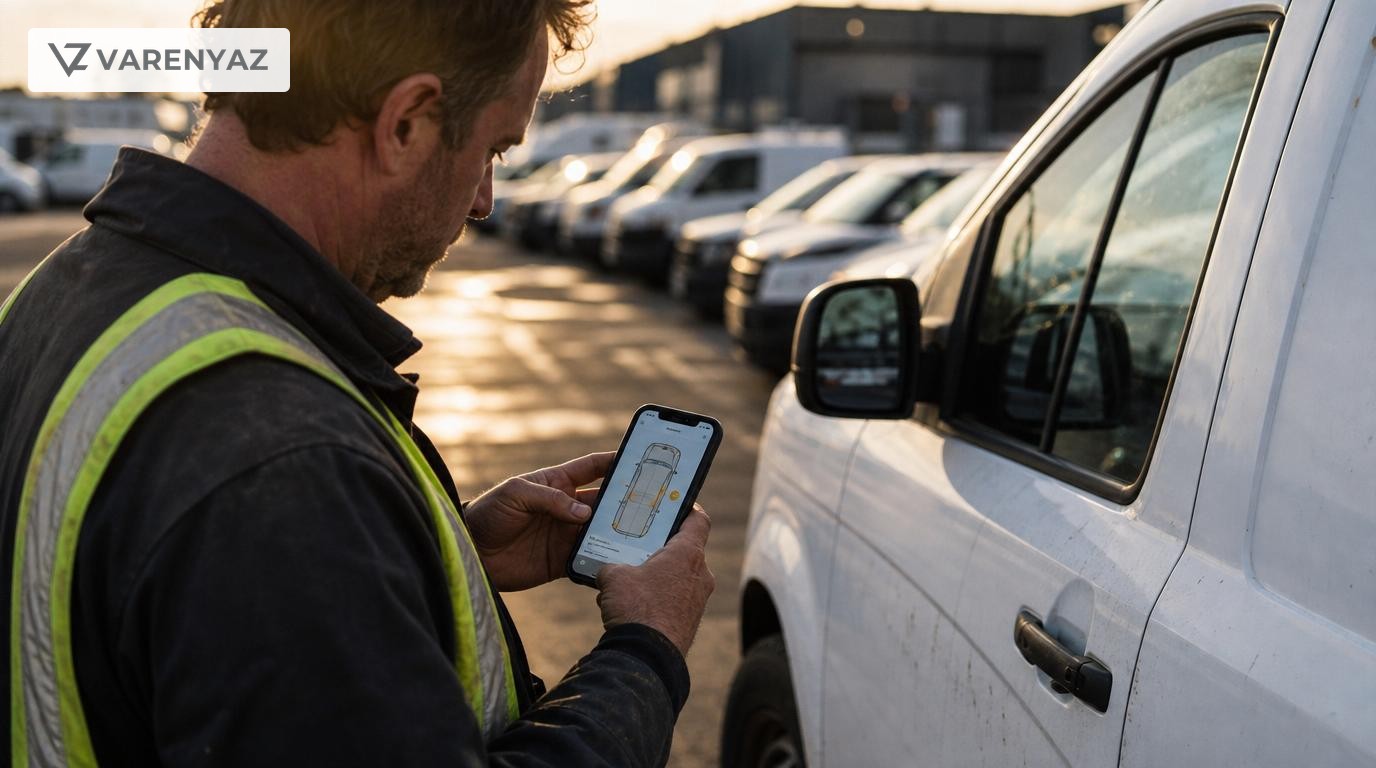
The unnamed startup lets enterprise customers capture photos or short videos of a vehicle using a standard smartphone. Its AI models then scan the imagery to identify, classify, and localize damage such as dents, scratches, cracked lights, or bumper impacts.
Instead of relying on manual walkarounds, paper forms, or expensive fixed inspection booths, the system generates a structured inspection report in the cloud. That report can be used to:
- Trigger or validate insurance claims
- Record pre- and post-rental vehicle condition
- Support fleet maintenance scheduling
- Provide condition transparency in marketplaces or auctions
By design, the product is mobile-first and hardware-light. Any smartphone with a decent camera becomes an inspection device, lowering the barrier to rollout across large, geographically distributed fleets.
Why Sandberg’s involvement matters
AI-powered vehicle inspection is not a brand-new idea; several insurtech and mobility startups have been exploring the space for years. What makes this round notable is who is leading it.
Sandberg brings three kinds of signal to the market:
- Enterprise readiness: Her track record at Meta indicates she understands how to scale platforms serving millions of users and complex advertisers and partners.
- Boardroom visibility: Her name alone will prompt boards, insurers, fleets, and mobility CEOs to re-examine AI-first inspection strategies.
- Go-to-market leverage: Sandberg’s network can accelerate enterprise sales, partnerships, and regulatory engagement across mature markets like the United States, United Kingdom, and emerging growth regions such as India.
For investors, this signals that AI inspection is maturing into a category where brand-name backers see potential for meaningful market share and durable infrastructure, not just pilots.
Direct answer: what this means for business leaders
In practical terms, AI-powered vehicle inspection lets fleets, insurers, rental firms, and mobility platforms replace slow, subjective manual inspections with consistent, software-defined workflows that run on any smartphone. This can cut inspection and claims cycle times, improve fraud detection, and standardize condition data across thousands of vehicles, while avoiding expensive hardware installations.
Who stands to benefit: insurers, fleets, rentals, and marketplaces
The startup is clearly optimized for enterprise workflows rather than consumer DIY use. Key segments include:
- Insurance carriers and MGAs: Automating first notice of loss (FNOL), triaging damage, supporting straight-through processing, and reducing adjuster site visits.
- Fleet operators and logistics players: Recording condition at handover points, tracking wear and tear, and informing maintenance decisions across trucks, delivery vans, or corporate car fleets.
- Rental and car-sharing platforms: Digitizing the pre- and post-rental inspection, reducing disputes, and increasing transparency for customers.
- Online marketplaces and auctions: Capturing richer vehicle condition data to improve listing accuracy, pricing, and buyer trust.
In each case, the platform’s value hinges on two promises: speed (near-real-time assessments) and consistency (reducing subjectivity between different agents, branches, or partners).
Operational and technology implications
For CTOs and product leaders, this funding round is a strong signal that AI inspection is shifting from add-on feature to core infrastructure. Several strategic implications emerge:
- APIs and integration first: AI inspection is only as valuable as its connections to claims systems, fleet management platforms, rental apps, and CRM tools. Expect vendors to double down on API-first architectures and web-based dashboards.
- Edge-friendly capture: While inference happens in the cloud today, guided capture and basic validation will increasingly happen on-device to improve image quality and reduce rework.
- Data feedback loops: Every inspection feeds the model, improving detection across vehicle types, colors, and lighting conditions. Clients with large fleets will want data controls and clear terms on model training.
- UX for non-technical staff: Inspectors, drivers, and customers may not be tech-savvy. Simple, guided capture flows and clear feedback are critical to adoption.
Software teams evaluating vendors will need to assess SDKs, web admin consoles, audit trails, and how easily the AI outputs can be embedded into existing apps, portals, and workflows.
Risks, constraints, and unanswered questions
Despite the momentum, AI vehicle inspection remains a high-stakes domain with several open issues:
- Model accuracy and edge cases: Performance can vary under low light, bad weather, unusual vehicle types, and heavily modified cars. False negatives (missed damage) and false positives (overstated damage) both carry financial and reputational risks.
- Regulatory scrutiny: As regulators pay more attention to AI in financial services and insurance, explainability, record-keeping, and auditability will become non-negotiable. Enterprises will ask: why did the model make this call?
- Data privacy and consent: Vehicle images often capture license plates, surroundings, and sometimes bystanders. Robust redaction, encryption, and retention policies are essential, particularly in regions with strong data laws like the EU and the UK.
- Change management: Claims adjusters, inspectors, and field staff may fear being replaced. Successful deployments will position AI as an assistant, not a replacement, and back this up with clear role definitions.
Enterprises should insist on transparent performance metrics, pilot programs with human-in-the-loop review, and clear escalation paths when AI and human assessments diverge.
Global lens: U.S., U.K., and India
Geography will shape how quickly AI inspection becomes standard.
- United States: Large auto insurance markets, extensive vehicle ownership, and a mature insurtech ecosystem make the U.S. an early adopter. Car rental and subscription models add further demand.
- United Kingdom: A concentrated insurance sector and strong regulatory expectations favor vendors that can demonstrate robust governance and explainable AI, not just technical prowess.
- India: Rapid growth in two- and four-wheeler ownership, rising digital insurance penetration, and cost-sensitive fleets make smartphone-based AI attractive, provided it can handle diverse vehicle types and challenging environmental conditions.
Sandberg’s global profile may help the startup navigate these varied markets, but go-to-market success will still depend on local partnerships and regulatory fluency.
What leaders should watch next
For founders, operations heads, and investors, a few signals will indicate how this market is evolving:
- Major carrier endorsements: When top-tier insurers formalize AI inspection as a standard path for certain claim types, others will quickly follow.
- OEM and marketplace integrations: Deep integrations with automakers, dealer networks, or large mobility marketplaces will turn inspection from a point solution into infrastructure.
- Pricing models: Whether vendors converge on per-inspection, per-vehicle, or platform subscription pricing will shape adoption for fleets of different sizes.
- Consolidation: As larger software and data providers look to own the claims and fleet stack, acquisitions of AI inspection startups are likely.
In parallel, internal build-versus-buy debates will intensify as more open-source and commercial computer vision models become available.
How VarenyaZ fits into this shift
Whether you partner with this newly funded startup or another vendor, AI inspection only becomes transformative when it is tightly integrated into your digital products and operations.
That means:
- Designing intuitive web and mobile flows for guided vehicle capture
- Building secure APIs between inspection results, claims platforms, and fleet systems
- Setting up analytics and dashboards to monitor performance and exceptions in real time
- Automating downstream actions such as task creation, notifications, or pricing adjustments
If your organization is exploring AI for inspections, claims, or asset management, you can start a conversation with VarenyaZ at https://varenyaz.com/contact/.
Conclusion: AI inspections as a new digital primitive
Sandberg’s $10 million bet on AI-powered vehicle inspection is more than another funding headline. It highlights a broader pattern: visual AI is becoming a foundational capability for how physical assets are managed, insured, and traded.
For business leaders, the decision is no longer whether AI will touch inspections, but how quickly you can redesign your web platforms, internal tools, and customer journeys to take advantage of it. VarenyaZ helps enterprises do exactly that—by combining custom web design, scalable development, automation, and AI engineering to turn promising technologies like AI inspection into reliable, production-grade systems.
Editorial Perspective
"AI-powered vehicle inspection is moving from gimmick to operational backbone, giving insurers and fleets a programmable way to understand asset condition in real time."
"The real unlock is not just detecting damage but wiring those insights straight into claims, pricing, and maintenance workflows through modern web and API infrastructure."
Frequently Asked Questions
What is the AI-powered vehicle inspection startup backed by Sheryl Sandberg?
It is a startup founded in 2021 that uses AI and computer vision to automatically detect and classify vehicle damage from smartphone photos or videos. The platform is designed for enterprise customers such as insurers, fleet operators, and rental or mobility platforms to automate vehicle inspections and streamline claims and operations.
How does AI-powered vehicle inspection work for fleets and insurers?
Operators or drivers capture photos or short videos of a vehicle using a standard smartphone. The images are uploaded to the startup’s platform, where computer vision models identify dents, scratches, cracks, and other damage, estimate severity, and generate structured inspection reports that can feed into claims systems, fleet management tools, or rental workflows.
Why is Sheryl Sandberg’s $10 million investment significant for the automotive and insurance sectors?
Sandberg’s backing validates AI-powered vehicle inspection as an emerging infrastructure layer for mobility and insurance. Her involvement signals that enterprise-grade, mobile-first AI tools are moving from pilots to core operations, encouraging other investors and corporate buyers to take the category more seriously and accelerate adoption.
What are the main business benefits of AI vehicle inspection?
Key benefits include faster and more consistent inspections, reduced claims-processing time, better fraud detection, lower labor costs for manual checks, and standardized condition reports across large, distributed fleets. It can also improve customer experience by making rental check-in and check-out, peer-to-peer car sharing, and insurance claims more transparent and predictable.
What risks or challenges come with adopting AI-powered vehicle inspection?
Enterprises must manage model accuracy, false positives or negatives, and bias across different vehicle types and lighting conditions. They also need to address integration with legacy systems, data privacy, regulatory expectations around explainability, and change management for staff who previously handled manual inspections and claims assessments.
How can companies build or integrate similar AI inspection capabilities?
Companies can either partner directly with specialized inspection platforms or build custom solutions using computer vision models integrated into their web and mobile apps. This typically requires expertise in AI model selection, MLOps, secure API design, and UX for guided capture. A partner like VarenyaZ can help architect and develop end-to-end custom web, AI, and automation solutions.
Selected References
Stay Ahead
Get concise, actionable insights on AI, digital strategy, and innovation. No spam, just value.
More Coverage
Related News
Jul 18, 2026
Databricks Soars to $188B as Open AI Stack Bets Pay Off
Databricks has surged to a $188 billion valuation, extending its transformation from data lakehouse vendor to full-stack enterprise AI platform. The company is leaning hard into open-weight AI models, publishing research on cost savings for AI-assisted coding compared with closed APIs. For enterprises, this signals a major shift: AI strategy is moving from one-off pilots to platform decisions where data, governance, and model choice converge. Leaders should reassess where to run AI workloads, how to manage costs, and how open models fit into their software delivery and analytics roadmaps.
Jul 17, 2026
AI Travel Agency Fora Hits Unicorn Status With $60M Round
Fora, an AI-powered travel agency platform, has raised a $60 million Series D round led by Forerunner and Tactile Ventures, valuing the company at $1 billion. The startup blends AI trip-planning tools with a distributed network of travel advisors, aiming to modernize how travel is sold and supported. For founders and operators, the deal highlights continued investor belief in vertical AI platforms, human-in-the-loop automation, and software that upgrades legacy, commission-based industries like travel.
Jul 16, 2026
Lululemon Backs Nylon Recycling Startup Syntetica in $30M Round
Lululemon has backed French startup Syntetica in a $30 million Series A round to scale a new chemical process for recycling nylon from textile and industrial waste. The deal highlights how performance apparel brands are racing to secure circular materials, reduce dependence on fossil-based nylon, and meet tightening sustainability regulations and customer expectations.