

What Happened In Brief
Anduril is reportedly in talks to raise a new funding round that would value the defense-tech and AI company at about $100 billion, more than tripling its valuation from the prior year. This would make Anduril one of the world’s most valuable private defense and dual-use AI companies, highlighting how investors view autonomous systems, sensors, and AI-powered command platforms as core national infrastructure. For founders, CTOs, and public sector-focused vendors, this is a signal that AI-native defense and security stacks are entering a new phase of capital intensity and strategic relevance.
News Desk
LiveEditorial Review
VarenyaZ Editorial Desk, Managing Editor
Global
In This Story
Coverage Signals
Key Takeaways
- Anduril is reportedly in talks to raise capital at an approximately $100 billion valuation, over three times last year’s mark.
- The move would cement Anduril as one of the most valuable private defense and dual-use AI companies globally.
- Investor appetite is shifting heavily toward software-first, AI-native defense platforms over traditional hardware plays.
- For enterprises and governments, the signal is clear: autonomous systems, sensor fusion, and AI-enhanced command platforms are becoming strategic infrastructure.
- The surge in defense AI funding raises fresh questions about ethics, export controls, and concentration of power in a few vendors.
- CTOs and product leaders in regulated sectors can draw lessons from Anduril’s vertically integrated, software-centric architecture and rapid deployment cycles.
- Procurement teams in the US, UK, India and allied markets should prepare for a new wave of AI-native defense and security tenders.
- Organizations modernizing critical systems should align web platforms, data pipelines, and AI services to integrate with emerging defense and public-safety APIs.
Anduril’s reported $100B valuation puts defense AI on a new tier
Anduril, the fast-growing defense and security technology company, is reportedly in talks to raise a new funding round that could value the firm at around $100 billion, according to Reuters as cited by TechCrunch. If finalized, the deal would more than triple Anduril’s valuation from the previous year and reset expectations for what an AI-native defense startup can be worth.
While the company has not publicly confirmed the round or valuation, the very prospect of a $100 billion mark places Anduril in a league typically reserved for late-stage consumer platforms and cloud giants—underscoring the strategic importance of software-defined defense and dual-use AI.
Quick answer: What business leaders need to know
Anduril is reportedly negotiating a funding round that would value it at roughly $100 billion—over 3x its last valuation. This move signals a structural shift in defense and national security markets toward AI-native, software-first platforms that combine autonomous systems, sensor fusion, and real-time command-and-control. For founders, CTOs, operations leaders, and government-focused vendors, the message is clear: mission-critical infrastructure is being rebuilt as integrated data and AI stacks, not just hardware. Budgets, procurement, and competition will increasingly favor companies that can design secure, interoperable web platforms and AI systems that plug seamlessly into this emerging ecosystem.
What happened: A potential funding round at mega-valuation
Per Reuters reporting referenced by TechCrunch, Anduril is said to be in advanced talks with investors to secure a new round of capital that would value the company at about $100 billion. The investor mix, exact amount being raised, and deal terms have not been disclosed.
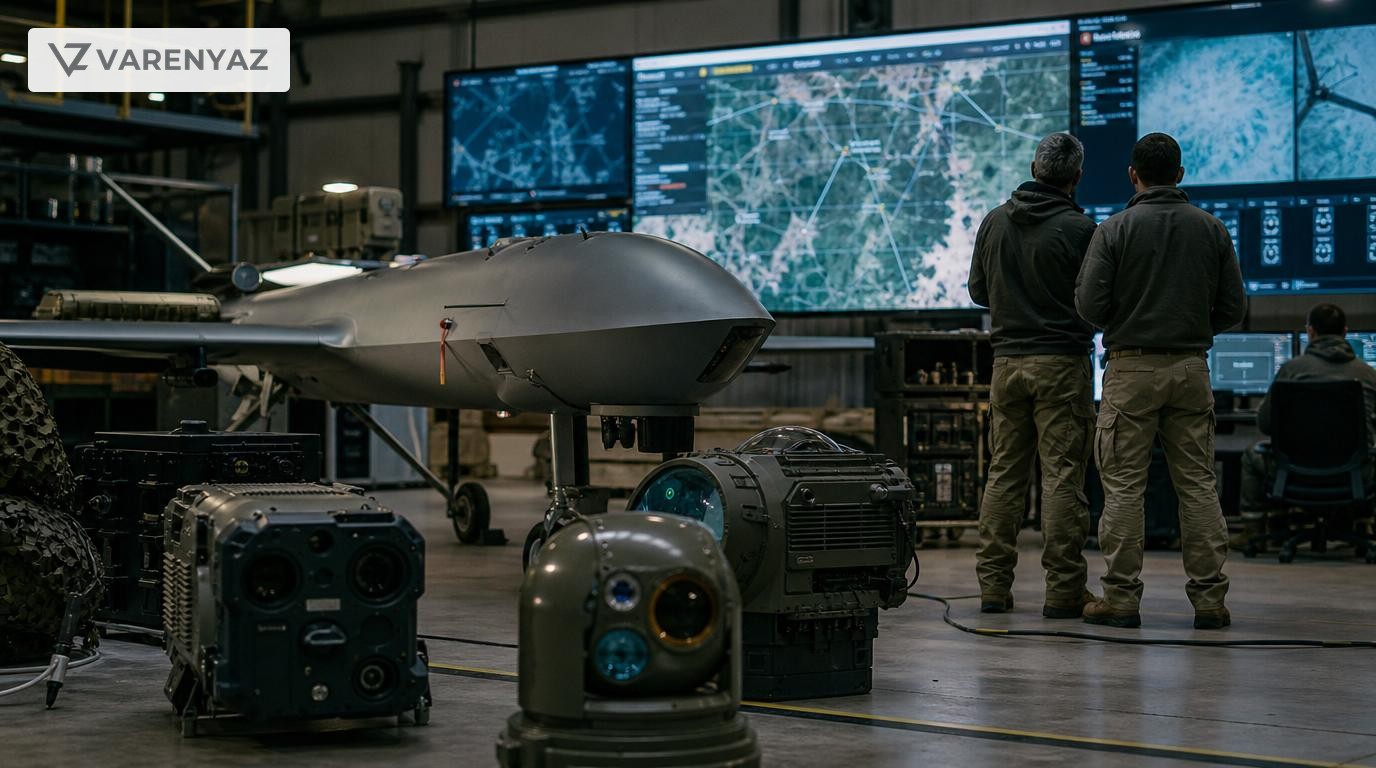
This follows a string of substantial contracts and prior financings that have rapidly expanded Anduril’s footprint in US and allied defense programs. The company has positioned itself as a software-first alternative to legacy defense primes, offering an integrated stack of autonomous drone systems, sensor networks, and its flagship AI-powered operating system, Lattice.
If confirmed, the round would:
- More than triple Anduril’s valuation versus its previous funding event.
- Place the company among the world’s highest-valued private defense and dual-use AI players.
- Send a powerful signal about investor confidence in AI-centric military and security platforms.
Why it matters: Defense is becoming a software and AI market
For decades, defense technology has been dominated by hardware-heavy models: airframes, ships, vehicles, and large-scale physical platforms. Anduril represents a different paradigm: a software-defined, AI-native approach that treats hardware as a configurable endpoint on a network rather than the core product.
A potential $100B valuation tells us several things:
- Software is the new battleground. Intelligence, coordination, and autonomy are shifting into code and cloud-native architectures. Hardware is still essential, but less of the value is locked inside it.
- Data fusion is strategic infrastructure. Systems like Lattice are designed to ingest diverse sensor feeds, apply computer vision and other AI models, and present real-time, actionable views to operators. That data layer is now a defensible moat.
- Defense innovation now resembles enterprise SaaS and infra. Rapid iteration, platform thinking, API-led integration and continuous deployment are gradually replacing decade-long procurement cycles for purely bespoke systems.
For leaders building products in adjacent domains—public safety, critical infrastructure, logistics, or industrial operations—the Anduril story shows that markets will reward teams who treat complex physical systems as nodes in a coherent software platform.
Business implications: Signals for founders, CTOs and investors
1. Valuation benchmarks for dual-use AI just moved
If Anduril closes at or near the reported $100B mark, dual-use and defense AI startups worldwide will reference this as a valuation anchor. That could translate into:
- More late-stage capital entering national security tech.
- Higher price expectations for startups with credible defense or critical infrastructure roadmaps.
- Increased competition from generalist funds entering the defense-innovation space.
2. Government tech is now a viable growth story
For years, many founders avoided government markets due to slow sales cycles and heavy compliance. A mega-valuation for Anduril suggests that:
- Investors believe defense and government revenues can scale to tech-giant levels when the product is software-led.
- Modern web architectures, developer-friendly APIs, and strong UX can break through legacy procurement skepticism.
- Vendors who can integrate cleanly with defense and public sector systems—secure web applications, data pipelines, AI services—can capture meaningful growth.
3. Expect more M&A and strategic partnerships
Incumbent defense contractors and large cloud providers are unlikely to ignore this re-rating of AI-native defense companies. We can expect:
- Accelerated acquisitions of smaller AI, robotics, and sensor-fusion startups.
- Partnerships between cloud hyperscalers and defense-platform vendors around infrastructure, security, and compliance.
- Pressure on mid-market vendors to either become integrators or niche specialists in the emerging defense-AI stack.
Technology and AI relevance: The stack behind the valuation
Beyond the headline numbers, Anduril’s prospective valuation reflects a specific technology architecture that other sectors can learn from:
- Unified operating layer. Lattice acts as a common operating system for sensors, drones, and other assets—handling data ingestion, analysis, and tasking.
- Autonomous and semi-autonomous systems. Drones and other field assets use computer vision, onboard AI, and resilient communications to operate with limited human oversight.
- Web-based command and control. Browser-accessible dashboards deliver situational awareness, collaboration, and controls to distributed teams.
- Secure-by-design integration. Defense-grade identity, access control, logging, and auditability are built in from the start.
For enterprises in logistics, manufacturing, energy, and smart cities, this pattern is directly transferable: build a secure web and data layer, connect edge devices and sensors, apply AI at key decision points, and expose mission-critical interfaces through robust, latency-aware web applications.
If you are planning to modernize your own mission-critical platform with AI, automation, and secure web interfaces, you can start a tailored architecture discussion with VarenyaZ here: https://varenyaz.com/contact/.
Risks, ethics and open questions
With scale comes scrutiny, and a $100B valuation for a defense AI company will inevitably draw attention to several unresolved issues:
- Autonomy and lethal force. Policymakers and civil society groups will scrutinize how autonomous systems are used, especially any role in lethal decision-making.
- Surveillance and civil liberties. Dual-use technologies that can be deployed for border security or urban monitoring raise complex privacy and rights concerns.
- Vendor concentration risk. When a small number of private companies control core AI infrastructure for national security, governments must manage dependency and ensure transparency.
- Export controls. As demand grows in allied nations such as the UK and India, export regulations will shape which capabilities can be shared and how platforms must be adapted.
Business and technology leaders operating in adjacent domains must anticipate stricter governance, audits, and ethical requirements for AI systems that interact with public-sector or critical infrastructure environments.
What to watch next
For decision-makers and investors, several near-term developments are worth tracking:
- Official confirmation and round details. Size of the round, lead investors, and governance terms will reveal how much control and influence new capital brings.
- Contract pipeline. Watch for new multi-year deals or framework agreements with the US Department of Defense, UK MOD, or partners in regions like India.
- Product roadmap disclosures. Any new capabilities in Lattice, autonomous platforms, or software integration tooling will signal Anduril’s long-term platform ambitions.
- Regulatory posture. Statements from regulators, lawmakers, or oversight bodies may hint at future guardrails for defense AI and dual-use tech exports.
How enterprises can respond: Lessons from Anduril’s model
Even if you are not in defense, Anduril’s trajectory offers practical lessons for building resilient, AI-enabled digital platforms:
- Think in platforms, not point solutions. Create a consistent operating layer—web apps, APIs, and data models—that can integrate diverse devices, services, and AI models.
- Embrace AI as a core feature, not a bolt-on. Design workflows where AI models are embedded in monitoring, decision-support, and automation from day one.
- Prioritize reliability and observability. Mission-critical apps need strong logging, alerting, and incident response, especially when AI models are in the loop.
- Invest in secure, compliant foundations. Identity, authorization, encryption, and audit trails must be part of the base architecture, not deferred to later stages.
VarenyaZ partners with organizations to design and build this kind of infrastructure—combining custom web app development, data engineering, automation, and applied AI so your teams can operate with the same level of integration and situational awareness expected in modern defense environments.
Conclusion: A new ceiling for defense AI—and a blueprint for builders
The prospect of Anduril achieving a $100 billion valuation signals a turning point: AI-native, software-defined platforms are no longer speculative add-ons to defense—they are becoming the backbone of national security strategy. That shift will ripple into adjacent sectors, from critical infrastructure to logistics and public safety, where the same principles of real-time data fusion, autonomy, and secure web-based control apply.
For founders, CTOs, and operations leaders, the mandate is clear: architect systems that treat data, AI, and user-facing web experiences as a cohesive whole. Whether you are modernizing legacy operations or building a new digital platform from the ground up, VarenyaZ can help you design, develop, and deploy secure web applications, automation pipelines, and AI-driven services that are ready for this new era of mission-critical software.
Editorial Perspective
"A prospective $100 billion valuation for Anduril signals that AI-native software platforms are becoming the core of modern defense infrastructure, not an add-on to legacy hardware."
"For technology leaders, Anduril’s rise is a wake-up call that real-time data fusion, autonomy, and robust web-based command interfaces are converging into a single, mission-critical stack."
"Investors backing Anduril at this scale are effectively betting that government procurement will increasingly favor configurable, software-defined systems that can be updated at the speed of code."
"The challenge for enterprises is to bring the same level of integration and reliability to their own digital operations, without the defense-sector budget or risk appetite."
Frequently Asked Questions
What is Anduril’s reported new valuation?
According to reporting based on sources cited by Reuters, Anduril is in talks to raise a new funding round that could value the company at around $100 billion, more than tripling its valuation from the previous year. The deal is not yet confirmed or formally announced.
Why is Anduril’s potential $100B valuation significant?
A near-$100 billion valuation would place Anduril among the most valuable private defense and dual-use AI companies in the world. It underscores how investor focus is shifting from traditional defense primes toward software-first, AI-native platforms for surveillance, autonomy, and command-and-control systems.
What does Anduril do in the defense and AI space?
Anduril develops an integrated stack of defense and security technologies, including autonomous drones, sensor networks, and Lattice, its AI-enabled operating system designed to fuse data, manage missions, and support decision-making for military, border security, and critical infrastructure operators.
How could Anduril’s valuation impact other startups and vendors?
If the round closes, it could reset valuation benchmarks for dual-use and defense AI startups, attracting more capital into national security tech. It may also intensify competition for government contracts and accelerate consolidation as incumbents seek software and AI capabilities through acquisitions.
What should CTOs and product leaders take away from Anduril’s growth?
Anduril’s trajectory highlights the value of vertically integrated, software-defined architectures that can ingest heterogeneous sensor data, apply AI in real time, and deliver mission-critical interfaces. Enterprises can apply similar principles to build resilient digital platforms for logistics, public safety, and industrial automation.
How can organizations prepare to work with AI-driven defense and security platforms?
Organizations should modernize their web infrastructure, APIs, and data pipelines to integrate securely with AI-powered platforms, invest in governance and compliance, and build automation and monitoring layers. Working with partners experienced in AI development and secure web app design can accelerate this transition.
Selected References
Stay Ahead
Get concise, actionable insights on AI, digital strategy, and innovation. No spam, just value.
More Coverage
Related News
Jul 24, 2026
Corgi’s $4B valuation shows how hot AI insurance has become
AI-first insurance startup Corgi has reportedly raised its third funding round in just eight weeks, at a valuation of around $4 billion. This pace places Corgi among the most aggressively funded insurtechs in the current AI wave. For insurers, founders, and CTOs, the deal signals strong investor conviction in AI-native underwriting, risk scoring, and automated policy operations, but also raises questions about sustainability, regulatory scrutiny, and the pressure to convert rapid capital inflows into robust, compliant insurance products and reliable enterprise-grade platforms.
Jul 23, 2026
Travis Kalanick’s Atoms Raises $1.7B to Build Industrial AI Robots
Travis Kalanick’s robotics and industrial AI startup Atoms has raised $1.7 billion in funding led by Andreessen Horowitz, with Uber participating. Atoms says it will use robotics, computer vision, and AI to modernize physical operations such as warehouses, fulfillment centers, and logistics hubs. For enterprises, the round signals intensifying investment in end-to-end automation platforms, with potential impacts on supply-chain resilience, labor models, and how software products integrate with real-world, robot-enabled infrastructure.
Jul 22, 2026
Passionfroot Raises $15M to Scale B2B Creator Marketplace in US
Passionfroot, a German startup building a B2B creator marketplace, has raised $15M in Series A funding led by Insight Partners to drive its expansion into the US market. The platform focuses on professional creators and brands, streamlining sponsorships and campaign workflows. For marketing leaders and product teams, this signals a maturing creator economy where workflow, data, and integrations matter as much as reach. The move also creates opportunities for martech, CRM, and AI-powered tooling to plug into a rapidly formalizing brand-creator collaboration stack.