
Secure Payment Gateway Success in Hospitality
Learn how secure payment gateway development drives revenue, trust, and seamless guest journeys in hospitality and entertainment.

Quick Answer
Secure payment gateway development is now central to business success in hospitality and entertainment. Modern guests expect instant, card-on-file, and contactless payments across rooms, venues, apps, and on-property experiences. This article explains how to design PCI DSS–compliant, tokenized, omnichannel payment architectures, cut fraud, and unify guest data, while balancing build vs buy decisions and vendor risk. It closes with a practical roadmap and how a partner like VarenyaZ can architect and implement secure, AI-ready payment solutions.
In this article
Coverage signals
14 min
Jul 1, 2026
VarenyaZ Editorial Desk, Technical Content Review
Updated Jul 1, 2026
Key Takeaways
- Secure payment gateway development is a revenue and guest-experience strategy, not just a compliance checkbox.
- Hospitality and entertainment businesses must align with PCI DSS and regional regulations while simplifying guest journeys.
- Tokenization, encryption, 3D Secure, and risk-based authentication significantly reduce payment fraud and liability.
- Omnichannel payment design should cover direct bookings, on-property spend, mobile apps, kiosks, and third-party channels.
- Deep integration with PMS, POS, ticketing, and loyalty systems unlocks richer data and personalized offers.
- Build vs buy is rarely binary; hybrid architectures with certified gateways plus custom orchestration often work best.
- AI-driven fraud detection and personalization can materially increase authorization rates and guest satisfaction.
- Partnering with an experienced web, AI, and payment development team accelerates delivery and reduces risk.
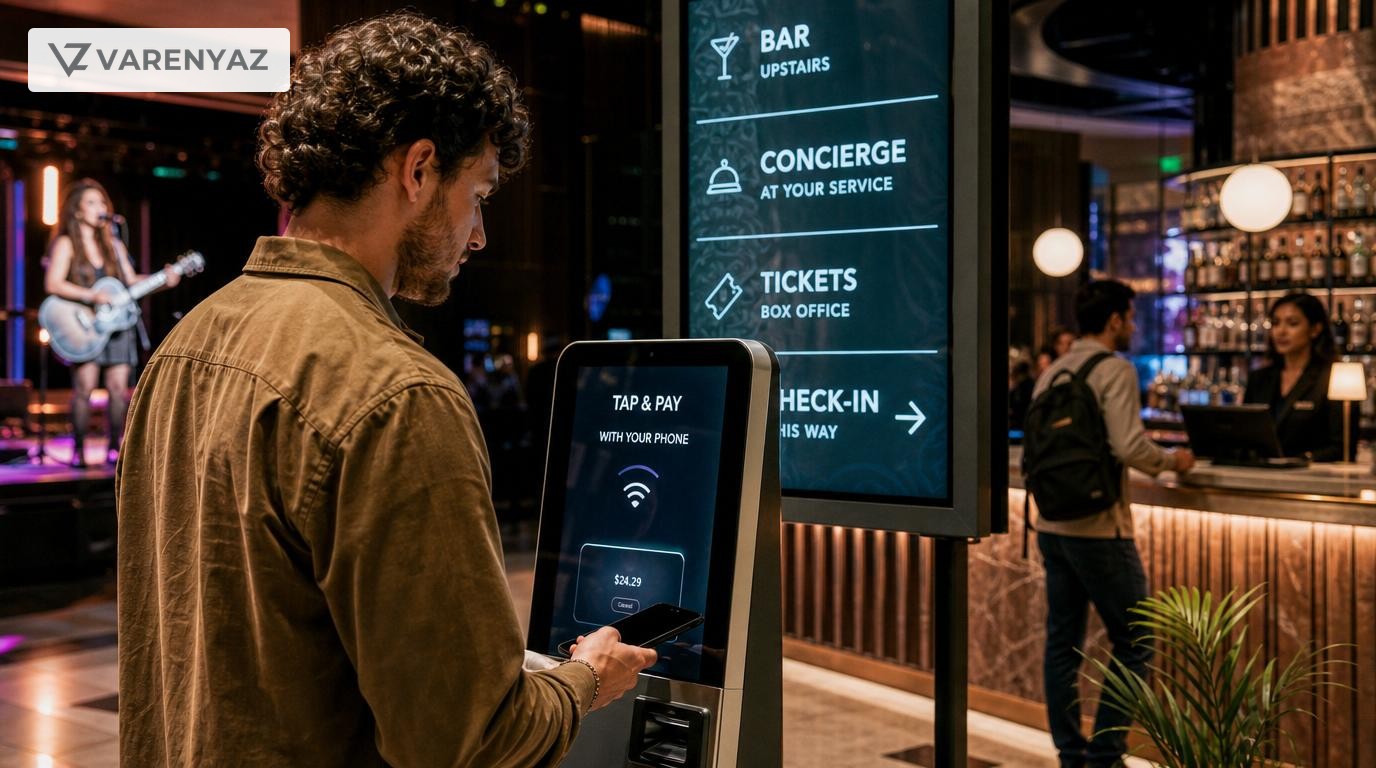
Why secure payment gateway development is now a growth lever in hospitality and entertainment
In hospitality and entertainment, payments used to be a back-office concern. Today, they sit at the center of your guest experience, your brand trust, and your revenue strategy. Every room booking, table reservation, spa session, concert ticket, or in-venue purchase flows through a complex network of web, mobile, on-property, and partner systems.
Secure payment gateway development connects all of these moving pieces. It lets you accept and route payments safely, comply with regulations, detect fraud, and still give guests the invisible, one-tap experience they expect from leading consumer apps.
For hotels, resorts, casinos, theme parks, arenas, and live entertainment venues, the brands that treat payments as a strategic capability are the ones unlocking higher conversion, better margins, and deeper loyalty.
Direct answer: what is secure payment gateway development for hospitality & entertainment?
Secure payment gateway development is the process of designing and implementing software that routes, authorizes, and settles guest payments safely across all your channels and venues. It focuses on:
- Protecting cardholder data with encryption and tokenization.
- Meeting standards such as PCI DSS and EMV.
- Integrating with PMS, POS, ticketing, and loyalty systems.
- Supporting cards, wallets, local payment methods, and subscriptions.
- Reducing fraud and chargebacks with tools like 3-D Secure and risk scoring.
- Delivering a seamless, brand-consistent checkout across web, mobile, kiosks, and in-person experiences.
Done well, secure payment gateway development turns payments from a cost center into an experience and data engine that drives repeat stays, higher per-guest spend, and more profitable events.
The hospitality and entertainment payment landscape: complex by design
Unlike pure e-commerce, hospitality and entertainment rely on a mesh of systems and touchpoints. A single guest can interact with your brand across days, channels, and venues, all for one trip or event. That complexity is exactly why a robust payment gateway strategy matters.
Key payment touchpoints in hospitality
- Direct digital bookings: Brand website, mobile app, and call center flows, with prepayment, deposits, and flexible cancellation rules.
- On-property spend: Restaurant and bar POS, spa services, in-room dining, mini-bar, parking, and partner outlets.
- Check-in and check-out: Front desk, mobile check-in, automated kiosks, and express check-out flows.
- Ancillary services: Upgrades, late check-outs, transport, tours, and third-party experiences.
- Loyalty and corporate contracts: Stored payment methods, negotiated rates, and centralized billing.
Key payment touchpoints in entertainment
- Ticketing: Online sales, box office, reseller portals, and group bookings.
- On-site purchases: Food and beverage, merchandise, VIP experiences, parking, and concessions.
- Membership and subscriptions: Season passes, fan clubs, and recurring payment plans.
- In-seat or in-queue ordering: Mobile or kiosk orders that link to a seat or wristband.
- Cross-venue ecosystems: Multi-venue passes, festivals, or resorts combining hospitality and events.
Without a coherent payment gateway architecture, you end up with disconnected systems, manual reconciliation, higher fraud risk, and a guest experience that feels fractured and inconsistent.
Why security and compliance are non-negotiable
Hospitality and entertainment are attractive targets for attackers because you process high volumes of card data across many touchpoints, often with legacy systems in the mix. That is where standards and regulations come in.
PCI DSS as the security baseline
The Payment Card Industry Data Security Standard (PCI DSS) sets out technical and operational requirements for protecting cardholder data. Any business that stores, processes, or transmits card data must comply with PCI DSS to avoid penalties and reduce breach risk.[1]
For hotels, casinos, and venues, this affects:
- Booking engines and websites.
- PMS and POS systems.
- Payment terminals and kiosks.
- Mobile apps and Wi-Fi portals that touch payments.
- Any internal tools where agents handle card data.
Effective secure payment gateway development aims to minimize your PCI scope by removing or reducing where card data can live in your environment.
Tokenization and encryption: removing the data risk
Two key techniques reduce risk and compliance burden:
- Point-to-point or end-to-end encryption (P2PE/E2EE): Card data is encrypted as soon as it is captured (for example, at the terminal or web browser) and only decrypted by your payment processor, not your own systems.
- Tokenization: Real card numbers are replaced with tokens that have no exploitable value if breached. EMVCo maintains widely adopted tokenisation specifications used by networks and wallets.[2]
In practice, this means your PMS, POS, ticketing, and apps work primarily with tokens. The sensitive card data remains in tightly controlled, certified environments, drastically reducing your exposure.
Strong Customer Authentication and 3-D Secure
In many regions, especially in the European Economic Area under PSD2, Strong Customer Authentication (SCA) requires multi-factor authentication for many electronic payments.[4] EMV 3-D Secure (3DS) is the industry-standard protocol that powers most cardholder authentication flows for online transactions.[3]
For hospitality and entertainment, getting SCA and 3DS right matters because you often handle:
- Cross-border transactions.
- Advanced bookings and no-show fees.
- Card-on-file charges for ancillaries or incidentals.
- Mobile app and web flows for tickets and in-venue purchases.
Intelligent secure payment gateway design uses risk-based authentication and exemptions where available to reduce friction while staying compliant.
Business value: how secure payment gateway development drives success
From a leadership perspective, it is worth asking: beyond avoiding breaches and fines, what do we actually gain from investing in secure payment gateway development?
1. Higher conversion and less checkout friction
Every additional form field, redirect, or failed authentication is an invitation for guests to abandon. A modern gateway can improve conversion by:
- Supporting one-click rebooking via safely stored tokens.
- Offering local payment methods and wallets relevant to each market.
- Optimizing 3DS flows and using exemptions intelligently.
- Reducing declines with smarter routing and retry logic.
For ticketing and room bookings, even an incremental lift in conversion at scale creates substantial revenue upside.
2. Increased guest trust and brand reputation
News of a data breach at a hotel group or entertainment brand travels fast and can linger for years. Demonstrably secure payment experiences—which feel seamless rather than obstructive—send a clear signal that you respect guest safety and privacy.
Visible trust markers, clear communication around secure storage, and trouble-free refund or chargeback handling all support long-term loyalty.
3. Better operational efficiency and reconciliation
Fragmented payment systems often mean nightly spreadsheets, manual reconciliations, and difficult audits. A unified payment gateway architecture can:
- Standardize settlement reports across properties and venues.
- Link payments directly to PMS, POS, or ticketing records.
- Automate refunds and partial refunds from a single console.
- Reduce support tickets associated with lost receipts and mismatched charges.
Finance, operations, and revenue management teams gain clearer visibility into performance and leakage.
4. Richer data for personalization and pricing
Every transaction contains information about guest preferences, timing, channels, and products. When your payment gateway is integrated with your data platforms—and de-risked via tokenization—you can:
- See end-to-end spend per guest or household across hospitality and entertainment assets.
- Link transactions to loyalty programs without storing raw card data.
- Optimize dynamic pricing and offer design based on real behavior.
- Identify cross-sell opportunities between stays, events, and experiences.
Combined with AI and analytics, secure payments become a strategic data source rather than a blind spot.
5. Reduced fraud and chargeback losses
Fraudsters target high-value bookings and high-demand events, especially when they can exploit manual workflows or legacy systems. A well-designed gateway reduces fraud through:
- EMV chip and contactless for card-present transactions.
- 3-D Secure 2.x, device fingerprinting, and behavioral analytics for online payments.[3]
- Velocity checks, blacklists, and rule-based controls tuned for your risk profile.
- AI-driven models that adapt to new fraud patterns in real time.
The impact is not just fewer direct losses, but less time spent on disputes and a lower risk of being classified as a high-risk merchant by acquirers.
Architecting a secure payment gateway for hospitality & entertainment
Translating strategy into implementation starts with architecture. The right design balances security, flexibility, and speed.
Core architectural components
- Payment gateway or processor: Handles authorization, capture, settlement, and card network connections.
- Payment orchestration layer: A custom or third-party layer that routes transactions to different gateways, applies business rules, and normalizes data.
- Integration layer: APIs, SDKs, and webhooks that connect the gateway with PMS, POS, ticketing, CRM, loyalty, and data warehouses.
- Security services: Tokenization, vaulting, encryption key management, and secrets management.
- Fraud and risk engine: Rule-based and AI-driven tools evaluating device, behavior, IP/geolocation, and transaction history.
- Reporting and analytics: Dashboards and exports for finance, operations, and marketing.
Design principles specific to hospitality and entertainment
Because your guest journeys are multi-step and multi-channel, keep these principles in focus:
- Guest-centric tokens: Use tokens that can be mapped to a guest profile, not just a single transaction. This enables card-on-file, rebooking, and cross-property recognition.
- Omnichannel continuity: Make it easy for guests to start on one channel (for example, browsing on mobile) and finish on another (for example, booking on desktop or at the front desk) without re-entering details.
- Local relevance: Support regionally popular payment methods in India, the United States, the United Kingdom, and other target markets—such as UPI, specific wallets, or local cards—as well as cross-border flows.
- Latency-sensitive design: Ticketing and in-venue orders often require sub-second authorization to keep queues moving and experiences smooth.
- Resilience and failover: Design failover paths between multiple acquirers or gateways to avoid lost revenue during outages.
Build vs buy: choosing your payment gateway strategy
For many executives, the key decision is where to draw the line between custom development and third-party services.
Fully outsourced (gateway-led) approach
Here, you rely heavily on a payment service provider (PSP) for everything from routing to vaulting.
Pros:
- Fast to launch with standard features and compliance handled by the PSP.
- Lower upfront engineering and certification burden.
- Single vendor for reporting and support.
Cons:
- Potential vendor lock-in and less leverage on fees or capabilities.
- Limited flexibility for complex hospitality and entertainment journeys.
- Harder to innovate on cross-channel experiences and custom risk strategies.
Fully custom gateway (processor-agnostic) approach
At the opposite end, you build your own payment gateway stack and connect directly to banks and schemes, or use minimal gateway services.
Pros:
- Maximum control over routing, pricing, and data.
- Custom-fit guest journeys and risk logic.
- Greater flexibility to add new payment methods.
Cons:
- Very high initial and ongoing investment in engineering, security, and compliance.
- Responsibility for PCI DSS scope, certifications, and audits.
- Time-to-market can be significantly longer.
Pragmatic middle ground: hybrid payment orchestration
For most hospitality and entertainment brands, a hybrid model is the sweet spot:
- Use one or more certified PSPs or gateways for card processing, vaulting, and compliance-heavy operations.
- Build a custom orchestration layer that controls routing, guest experience, and integration with your systems.
- Retain the ability to switch or add providers without rewriting your entire stack.
This approach lets you innovate quickly where it matters—guest-facing flows, data, and operations—while leveraging the scale and compliance posture of established processors.
Key implementation considerations for leaders
1. Map your payment flows end-to-end
Start with a thorough mapping exercise:
- List every payment touchpoint: web, app, call center, front desk, kiosks, POS, partner portals.
- Document current vendors and contracts for gateways, acquirers, and processors.
- Track where card data is captured, transmitted, and stored.
- Identify manual or high-friction steps in guest journeys.
This map becomes the backbone of both your business case and your technical design.
2. Prioritize PCI scope reduction
Work with your security and payment teams to reduce where card data exists in your environment:
- Route all card capture through hosted fields, secure SDKs, or P2PE-certified terminals.
- Move storage to tokenization vaults operated by compliant providers.
- Eliminate practices where agents manually handle or write down card data.
This not only reduces risk, it can materially lower the effort and cost of PCI assessments.
3. Plan for future channels and experiences
Your payment gateway remodel should not just fix today’s problems; it should anticipate tomorrow’s experiences:
- Mobile-first check-in and check-out with digital keys.
- Cashless events using wristbands or app wallets.
- In-seat ordering, subscription models, and memberships.
- Cross-brand or cross-property wallets across your portfolio.
Design APIs and data models that can support these scenarios without major rework.
4. Get governance and vendor management right
Secure payment gateway development touches legal, finance, operations, marketing, and IT. Set up:
- A cross-functional steering group with clear decision-making authority.
- Standardized vendor evaluation criteria covering security, uptime, roadmap, and costs.
- Regular performance reviews and incident-response protocols.
Clear governance reduces the risk of fragmented systems re-emerging over time.
AI’s role in modern hospitality and entertainment payments
AI is not a silver bullet, but when applied carefully within a secure gateway architecture, it can unlock tangible benefits.
AI for fraud detection and risk scoring
Machine learning models can ingest signals such as device fingerprint, IP reputation, booking patterns, and historical chargebacks to:
- Score each transaction for risk in real time.
- Trigger additional authentication only when needed.
- Block or flag suspicious behavior before losses occur.
This leads to fewer false positives (good guests wrongly declined) and more successful blocks of genuine threats.
AI for revenue optimization and personalization
On the revenue side, AI can use payment and interaction data to:
- Predict lifetime value and tailor offers accordingly.
- Recommend upgrades or bundles at booking or check-in based on similar guest profiles.
- Identify price sensitivity and respond with targeted discounts or perks.
- Detect churn risk and trigger retention campaigns.
Because payment data is sensitive, ensure these models operate on tokenized or aggregated datasets, with strict governance and privacy controls.
Risk, tradeoffs, and how to manage them
Any transformation of your payment infrastructure carries risk. Addressing them early ensures a smoother journey.
Integration complexity
Risk: Integrating a new payment gateway with existing PMS, POS, ticketing, and loyalty systems can be time-consuming and disruptive.
Mitigation:
- Adopt an API-first strategy with well-documented interfaces.
- Use middleware to decouple core systems from direct payment logic.
- Pilot with a single property or venue before rolling out group-wide.
Vendor lock-in and flexibility
Risk: Deep integration with a single PSP may limit your ability to negotiate or innovate later.
Mitigation:
- Design an orchestration layer that can switch providers.
- Avoid provider-specific logic baked into business workflows.
- Include exit and portability clauses in contracts.
Change management and training
Risk: Staff at the front desk, box office, or concessions may struggle with new tools, creating operational friction.
Mitigation:
- Prioritize intuitive UX for staff-facing interfaces.
- Provide focused training and just-in-time guidance within systems.
- Run parallel operations with old and new systems during transition phases where possible.
Regulatory and privacy evolution
Risk: Payment and data-protection regulations evolve, especially across regions like India, the United States, and the United Kingdom.
Mitigation:
- Design for configuration, not hard-coded rules, where regulations affect authentication and flows.
- Work with partners and counsel who monitor regulatory change.
- Keep data minimization and privacy-by-design principles at the core of your architecture.
A practical roadmap for executives
To move from planning to execution, follow a structured, phased approach.
Phase 1: Discovery and strategy
- Map all payment flows and vendors across hospitality and entertainment assets.
- Assess current PCI DSS posture, security gaps, and fraud exposure.
- Define business objectives: higher conversion, lower costs, better data, new experiences.
- Align stakeholders across IT, operations, finance, marketing, and legal.
Phase 2: Architecture and vendor selection
- Design your target architecture, including orchestration, integrations, and security components.
- Evaluate PSPs, acquirers, and fraud tools against business and technical requirements.
- Choose an integration and rollout strategy: property-by-property, venue clusters, or brand-by-brand.
Phase 3: Pilot implementation
- Implement the gateway and orchestration for a limited scope (for example, one flagship property or venue).
- Integrate with critical systems: PMS, POS, ticketing, and loyalty.
- Monitor KPIs: approval rates, conversion, fraud rate, and guest feedback.
- Iterate on UX, rules, and configurations based on real-world data.
Phase 4: Scale and optimize
- Roll out across properties, venues, and channels using a repeatable playbook.
- Introduce advanced features: dynamic routing, AI-based fraud detection, and new payment methods.
- Continuously measure and optimize performance, costs, and guest outcomes.
How VarenyaZ can help you build secure, guest-centric payment experiences
Designing and implementing secure payment gateway solutions for hospitality and entertainment requires a blend of disciplines: web and app development, payment architecture, security engineering, systems integration, and AI.
VarenyaZ brings these capabilities together to help businesses and brands:
- Architect secure payment platforms: From PCI-aware data flows to tokenization strategies and API-first design.
- Design guest-centric digital experiences: Booking engines, mobile apps, and in-venue interfaces that make payment feel effortless.
- Integrate with core systems: PMS, POS, ticketing, loyalty, CRM, and data warehouses for a unified view of revenue and guests.
- Embed AI safely: For fraud detection, personalization, and operational insights, aligned with your risk and compliance posture.
If you are planning to modernize your hospitality or entertainment payments, or design a new secure gateway from the ground up, you can start the conversation with VarenyaZ at https://varenyaz.com/contact/.
By combining thoughtful web design, robust web development, and AI-driven intelligence, VarenyaZ helps you turn your payment infrastructure into a strategic advantage—delivering secure, seamless experiences that guests trust and remember.
Editorial Perspective
Expert Review Notes
"In hospitality and entertainment, a secure payment gateway is no longer a background utility; it is the nervous system that connects guest experiences, revenue streams, and risk controls into a single, intelligent layer."
"The most resilient hospitality payment strategies combine certified third-party gateways with custom-built orchestration, allowing brands to innovate on guest journeys without reinventing core compliance machinery."
"Modern payment platforms that bake in tokenization, real-time risk scoring, and omnichannel data models are what enable personalization, faster checkouts, and higher authorization rates at global scale."
Frequently Asked Questions
What is secure payment gateway development in hospitality and entertainment?
Secure payment gateway development is the process of designing and implementing software that routes and processes guest payments safely across channels such as websites, booking engines, mobile apps, POS terminals, kiosks, and ticketing systems. It focuses on protecting cardholder data, complying with PCI DSS and regional regulations, preventing fraud, and delivering a frictionless, branded payment experience across the entire guest journey.
Why is PCI DSS important for hotels, resorts, and entertainment venues?
PCI DSS is a global security standard for handling cardholder data. Hospitality and entertainment environments process large volumes of card payments across many touchpoints, making them a high-value target for attackers. Aligning with PCI DSS helps reduce breach risk, avoid penalties from card schemes and acquirers, and protect guest trust. Using tokenization, strong access controls, and certified payment processors can significantly lower compliance scope and cost.
How can a secure payment gateway improve guest experience?
A modern, secure payment gateway allows guests to pay quickly and seamlessly, using their preferred payment methods across channels. Features like card-on-file, one-click rebooking, contactless and mobile wallets, in-room or in-seat ordering, and unified receipts create a sense of ease and control. When combined with loyalty and personalization, payment history can power smarter offers and bundles without forcing guests through repetitive data entry or confusing flows.
Should we build our own payment gateway or use a third-party provider?
Most hospitality and entertainment companies benefit from a hybrid approach. Core card processing is typically handled by certified third-party gateways and acquirers to reduce regulatory and operational burden. Your teams can then build custom orchestration, user interfaces, and integration layers on top to support unique guest journeys, revenue models, and reporting. The right mix depends on your scale, in-house capabilities, risk appetite, and long-term product roadmap.
How do AI and machine learning enhance secure payment gateways?
AI and machine learning enhance payment gateways by detecting fraud patterns in real time, adjusting risk scores by context (such as geography, device, and booking behavior), and improving approval rates through smarter routing. In hospitality and entertainment, AI can also link payment data to guest profiles to drive dynamic pricing, personalized offers, and cross-sell recommendations, while still respecting privacy and regulatory constraints.
What is the first step to modernizing our payment systems?
The first step is to map your current payment landscape across all guest touchpoints: booking channels, POS, ticketing, kiosks, apps, and partner integrations. Identify where card data flows, who stores it, and which vendors are involved. From there, prioritize reducing PCI scope with tokenization, consolidating vendors where possible, and designing an omnichannel architecture that supports your future guest experience, not just today’s patchwork of systems.
Selected References
Further Reading
Related perspectives
IoT Fleet Management for Modern Education
IoT fleet management in education connects vehicles, sensors, and software to give real-time visibility into school and university transport. It improves student safety, optimizes routes and fuel use, supports regulatory compliance, and enables data-driven budgeting. This article explains how the technology works, core components, business benefits, risks, and rollout steps. It also covers integration with existing systems, change management, and measurement frameworks so leaders can design a secure, scalable, and future-ready fleet strategy that aligns with educational goals and community expectations.
Why Property CRM Integrations Power Real-Time Manufacturing
Property CRM integrations connect your assets, plants, and customer records into a single real-time view, turning static equipment data into live manufacturing intelligence. By linking CRM with MES, ERP, IIoT platforms, and field service tools, manufacturers gain 360° visibility on each installed asset. That unlocks predictive maintenance, faster service, smarter production planning, and new outcome-based revenue models. The article explains the business value, core architecture, integration patterns, risks, and step-by-step rollout so leaders can design a scalable, secure real-time insight layer across operations.
Future-Proofing Your Business with AI
AI solutions for small business are now accessible, affordable, and essential for staying competitive. Startups and SMBs can use AI to automate routine work, personalize customer experiences, improve decisions, and test new products faster. This article explains where AI creates real value, how to choose the right use cases, assess your data, decide between off‑the‑shelf and custom AI, manage risks, and roll out a phased roadmap that fits limited budgets and teams.