

What Happened In Brief
Lululemon has backed French startup Syntetica in a $30 million Series A round to scale a new chemical process for recycling nylon from textile and industrial waste. The deal highlights how performance apparel brands are racing to secure circular materials, reduce dependence on fossil-based nylon, and meet tightening sustainability regulations and customer expectations.
News Desk
LiveEditorial Review
VarenyaZ Editorial Desk, Managing Editor
Global
In This Story
Coverage Signals
Key Takeaways
- Lululemon has backed French startup Syntetica in a $30 million Series A to scale nylon recycling technology.
- Syntetica focuses on converting post-industrial and post-consumer nylon waste into high-quality recycled feedstock for performance textiles.
- The deal reflects a shift from pilot sustainability projects to long-term, offtake-linked materials partnerships in apparel.
- Circular nylon can help brands hedge against volatile oil prices, carbon costs, and looming textile waste regulations.
- For CTOs and operations leaders, material traceability and digital supply-chain data will be critical to proving recycled content claims.
- Investors should watch how quickly Syntetica scales from niche volumes to multi-brand, multi-region supply.
- Brands that integrate circular materials with automation and AI-driven planning can unlock margin and emissions benefits simultaneously.
- Digital product pipelines and custom web apps will be key to integrating recyclers like Syntetica into legacy ERP and PLM systems.
Lululemon’s $30M bet on Syntetica puts nylon recycling in the spotlight
Lululemon has backed French startup Syntetica in a $30 million Series A funding round, a move that thrusts nylon recycling from the margins of sustainability decks to the center of performance apparel strategy.
While financial terms and cap table details remain private, the direction of travel is clear: major brands now see circular materials as core infrastructure, not CSR garnish. For founders, operations leaders, and investors, this signals a new phase in how textiles are sourced, verified, and digitized across the value chain.
What happened: a climate-tech materials play with global implications
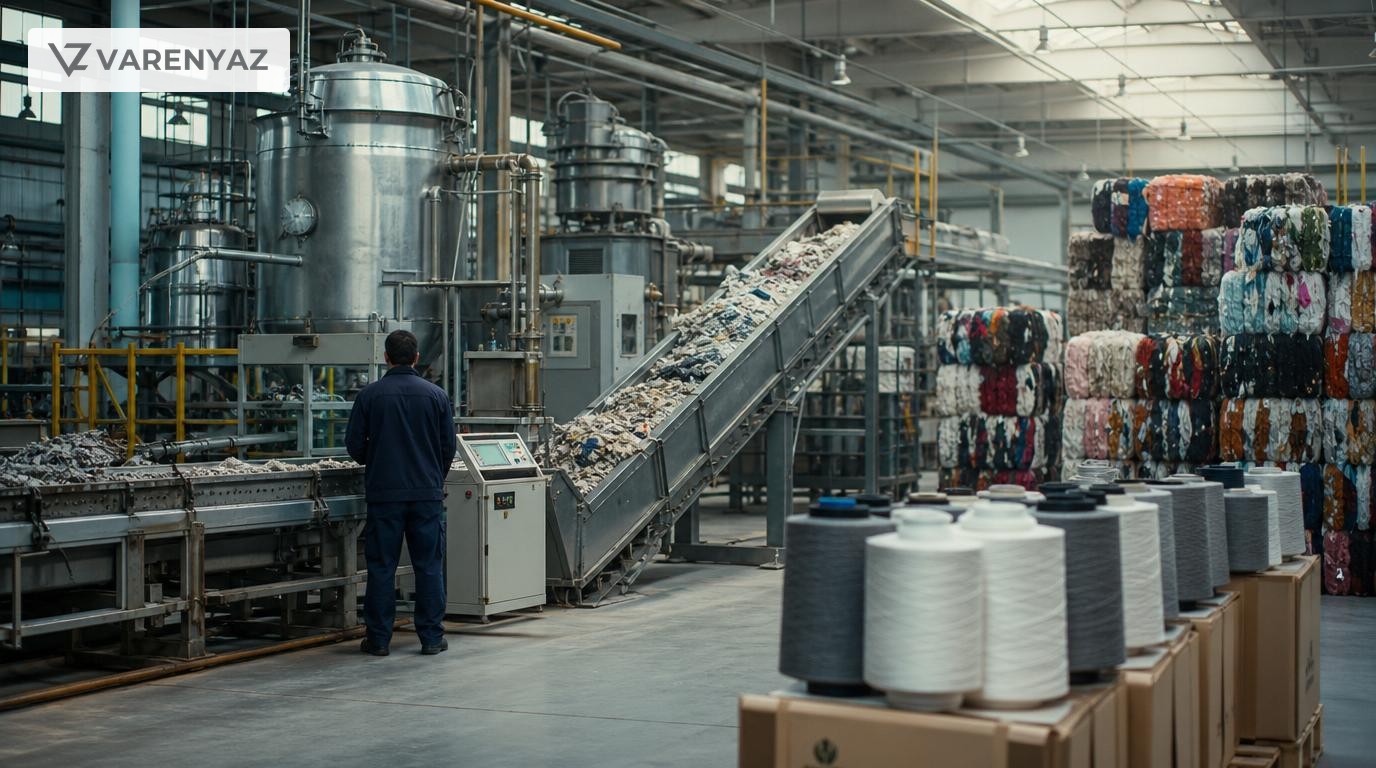
Syntetica has developed a process to recycle nylon from textile and industrial waste streams into high-quality feedstock suitable for performance fabrics. Nylon is notoriously hard to recycle compared with polyester, yet it is critical to stretch, durability, and sweat-wicking in athleisure and sportswear.
The $30 million Series A, with Lululemon as a flagship backer, will help Syntetica:
- Scale its recycling facilities in Europe
- Secure feedstock partnerships with waste collectors and manufacturers
- Validate quality and performance with top-tier apparel brands
- Build long-term offtake agreements that underpin future capacity
Lululemon’s participation is strategically important: the brand is heavily dependent on nylon-based technical fabrics and has set public climate and circularity goals. Backing Syntetica is both a hedge against regulatory and supply risk and a way to shape the emerging market for recycled nylon.
Why nylon recycling matters now
Nylon production is emissions-intensive and tightly coupled to fossil fuels. At the same time, regulators, especially in Europe, are tightening rules on textile waste and extended producer responsibility. That combination is forcing brands to rethink how – and from what – their fabrics are made.
Traditional mechanical recycling has limited application for nylon due to performance degradation and contamination issues. Syntetica’s approach, part of a broader wave of chemical and advanced recycling, aims to break nylon polymers down and rebuild them with near-virgin quality.
For decision-makers, this isn’t only about optics:
- Regulatory readiness: EU textile strategies and national EPR schemes make waste and recycled content a compliance issue, not just a PR topic.
- Cost and volatility: Virgin nylon prices track oil markets; recycled feedstock offers a potential hedge if scaled effectively.
- Customer expectations: B2C customers and B2B buyers are asking for credible, traceable sustainability data at product level.
Direct answer: what Lululemon’s Syntetica deal changes for the market
Lululemon’s backing of Syntetica in a $30 million Series A round accelerates the commercialization of nylon recycling by providing capital, demand, and credibility. It signals that performance apparel leaders expect recycled nylon to become a mainstream input and are prepared to secure supply early. This will push more brands to lock in circular materials partnerships, invest in traceability and digital supply-chain infrastructure, and treat materials innovation as a strategic lever rather than a marketing add-on.
Business impact: from brand promise to supply-chain architecture
For brands and retailers, Syntetica’s rise highlights a structural shift: material choices are becoming a board-level decision intertwined with finance, risk, and technology.
For product and sourcing leaders
- Portfolio redesign: Expect more SKUs built around recycled nylon blends, especially in performance categories where stretch and durability are non-negotiable.
- Contract structures: Offtake agreements will increasingly blend volume, price, and emissions performance, instead of focusing solely on landed cost.
- Supplier consolidation: Recyclers like Syntetica may become strategic partners on par with mills and garment factories.
For sustainability and risk teams
- Verified impact: Access to recycled inputs is only half the story; brands must verify recycled content and carbon savings through robust data and third-party validation.
- Regulatory reporting: Textile waste, circularity, and emissions data will need to be surfaced in corporate disclosures and potentially audited.
- Brand differentiation: Early adopters can differentiate on proven circularity rather than generic sustainability messaging.
For technology and operations leaders
- System integration: Recycling partners need to plug into PLM, ERP, sourcing, and inventory tools via APIs, with material attributes stored and tracked digitally.
- Data architecture: Material origin, recycled content percentage, and emissions per kilogram of fabric must become first-class data points, not footnotes in spreadsheets.
- Automation and AI: Algorithms that optimize for both margin and emissions, not just cost and lead time, will gain traction.
If your organization is exploring how to translate sustainability commitments into digital workflows and customer-facing experiences, you can start a conversation with VarenyaZ at https://varenyaz.com/contact/.
AI, software, and the future of circular textile supply chains
While Syntetica is primarily a materials and process innovation story, AI and software will determine how far and how fast such technologies scale into global supply chains.
Traceability and data platforms
To avoid greenwashing and meet emerging regulations, brands will need verifiable end-to-end visibility into where recycled nylon came from and how it moved through processing, spinning, knitting, and garment manufacturing.
- Digital passports: Product-level data structures that store material composition, recycled content, and lifecycle information.
- APIs with recyclers: Systems that can ingest batch-level data from Syntetica and similar partners, mapping it to SKUs and POs.
- Audit-ready records: Immutable or tamper-resistant logs to withstand regulatory scrutiny and third-party verification.
AI-driven planning and design
AI is increasingly influencing product design, demand forecasting, and sourcing optimization. In a world where recycled nylon availability, price, and emissions differ from virgin materials, brands will need models that can:
- Recommend material mixes that meet performance, sustainability, and cost constraints
- Simulate supply scenarios based on regulatory changes or feedstock disruptions
- Surface sustainability impacts directly in design and merchandising tools
Custom web applications, data dashboards, and AI recommendation engines will be vital interfaces between materials innovation (like Syntetica) and day-to-day decisions made by designers, planners, and buyers.
Risks and open questions around nylon recycling scale-up
Despite the momentum, nylon recycling is far from a solved problem. Business and technology leaders should monitor several unresolved issues:
- Scale and reliability: Can Syntetica operate at consistent quality and volume across multiple plants – and continents – while meeting tight brand timelines?
- Feedstock competition: As more recyclers come online, the competition for high-quality textile waste could intensify, affecting pricing and availability.
- Cost curves: Will recycled nylon approach cost parity with virgin inputs, or will brands need to absorb a “green premium” for years?
- Verification burden: How complex and costly will it be to prove recycled content and carbon reductions at the depth regulators and consumers require?
- Technology lock-in: Brands may face strategic risk if they tie too much of their circular strategy to a small number of recycling technologies or partners.
What leaders should watch next
To gauge how transformative this funding round becomes, executives should focus on a few concrete signals:
- Capacity announcements: New plants, expansions, and geographic diversification beyond Syntetica’s home market.
- Multi-brand partnerships: Deals with other global athletic, outdoor, or luxury brands, indicating broader industry validation.
- Independent certifications: Third-party verification of recycled content, material performance, and lifecycle emissions.
- Policy moves: Updates to EU textile and waste directives, US state-level EPR laws, and UK extended producer responsibility frameworks.
- Digital integration case studies: Evidence that brands are successfully wiring recyclers into product lifecycle management, procurement, and ecommerce platforms.
How VarenyaZ fits into the new circular materials stack
Syntetica’s funding and Lululemon’s involvement underscore a simple reality: the future of materials is digital as well as physical. Circular inputs only deliver strategic value when they are visible, measurable, and actionable across software systems.
That is where technology partners like VarenyaZ come in. By combining modern web design, web development, custom web app engineering, automation, and AI development, we help brands and supply-chain players to:
- Build data platforms that track material provenance and recycled content in real time
- Integrate recyclers and mills via APIs into PLM, ERP, and order management systems
- Design customer experiences that make sustainability data accessible and credible
- Automate reporting for regulatory disclosures and ESG stakeholders
- Use AI to optimize sourcing, inventory, and product design around both margin and impact
Conclusion: circular nylon as a digital transformation catalyst
Lululemon’s backing of Syntetica in a $30 million Series A round is more than a materials story. It is a signal that circular inputs like recycled nylon are now strategic assets requiring serious investment in data, integration, and intelligent software.
Brands, suppliers, and innovators that treat this as a catalyst for broader digital transformation will be better positioned to navigate regulatory shifts, unlock new customer value, and build resilient, low-carbon product ecosystems. VarenyaZ partners with these leaders to design and deliver the web platforms, custom applications, automation, and AI systems that make circular supply chains real, measurable, and scalable.
Editorial Perspective
"Lululemon’s backing of Syntetica confirms that circular nylon is moving from R&D experiment to core supply chain strategy, with material innovation now sitting alongside design and digital as a board-level priority."
"For brands, the hard work starts after the funding headline: connecting recyclers like Syntetica into product pipelines, PLM tools, and procurement systems will determine whether circular materials scale or stay niche."
Frequently Asked Questions
What is Syntetica and what does it do?
Syntetica is a French climate-tech startup that has developed a process to recycle nylon from textile and industrial waste into high-quality feedstock. Its technology aims to replace a portion of virgin, fossil-based nylon used in performance apparel, footwear, and industrial applications with chemically recycled, lower-impact material.
Why is Lululemon investing in nylon recycling?
Nylon is central to Lululemon’s performance apparel, but producing it is emissions-intensive and tied to fossil fuels. By investing in Syntetica, Lululemon is securing early access to recycled nylon, reducing climate risk, responding to consumer expectations, and preparing for stricter regulations on textile waste, carbon disclosure, and extended producer responsibility.
How could Syntetica’s technology impact apparel supply chains?
If Syntetica scales as planned, brands could source recycled nylon at industrial volumes with more consistent quality and traceability. That would shift purchasing away from purely cost-based decisions toward contracts that factor emissions, waste reduction, and regulatory compliance, and it will require new digital tools for tracking recycled content across complex global supply chains.
What should fashion and retail leaders watch next after this funding?
Leaders should track Syntetica’s capacity build-out, multi-year offtake deals with brands, and independent verification of recycled content and carbon savings. They should also watch evolving EU and US regulations on textile waste, plus how digital platforms, APIs, and AI tools make it easier to integrate recyclers into existing PLM, ERP, and sourcing workflows.
How can technology teams support circular materials adoption?
Technology teams can build or adopt systems that track material provenance, recycled content, and emissions at SKU level; integrate recyclers via APIs; and surface sustainability data into product design and sourcing decisions. Custom web apps and AI-driven analytics can turn sustainability commitments into verifiable, operational metrics for buyers, regulators, and customers.
What are the main risks for nylon recycling startups like Syntetica?
Key risks include scaling complex chemical processes to industrial volumes, securing reliable waste feedstock, meeting strict quality requirements of performance brands, and maintaining cost competitiveness against virgin nylon. Policy uncertainty and the speed of brand adoption also affect how quickly these models translate into profitable, long-term contracts.
Selected References
Stay Ahead
Get concise, actionable insights on AI, digital strategy, and innovation. No spam, just value.
More Coverage
Related News
Jul 4, 2026
The New Browser Wars: Beyond Search, Toward Privacy and AI
The new browser wars are no longer just about which search engine is set by default. A wave of alternative browsers is competing on privacy, AI-native features, and workflow integration instead. For businesses, browser choice now affects security, analytics, and employee productivity. This article explains what’s changing, highlights key options beyond Chrome and Safari, and outlines what technology and product leaders should consider as they define their browser standards and design customer-facing web experiences for this fragmented ecosystem.
Jul 3, 2026
Venice AI Hits Unicorn Status With $65M Bet on Private AI
Venice AI has raised a $65M Series A round at a unicorn valuation while already profitable and running at over $70M in annualized revenue, according to CEO Erik Voorhees. The company offers a privacy-first generative AI platform aimed at enterprises that want powerful models without giving up control of sensitive data, logs, and infrastructure. This funding underscores strong demand for secure, compliant AI stacks and intensifies competition in enterprise-focused AI infrastructure.
Jul 2, 2026
Neocloud Together AI Soars to $8.3B Valuation With $800M Raise
Neocloud Together AI has raised $800 million at an $8.3 billion valuation to expand its neocloud platform focused on hosting and serving open-source AI models. The new funding, up from a $3.3 billion valuation in early 2025, signals strong investor conviction in specialized AI cloud providers. For enterprises, this accelerates access to flexible, multi-model AI infrastructure beyond hyperscalers, but also raises questions about vendor lock-in, cost management, and platform maturity.