

What Happened In Brief
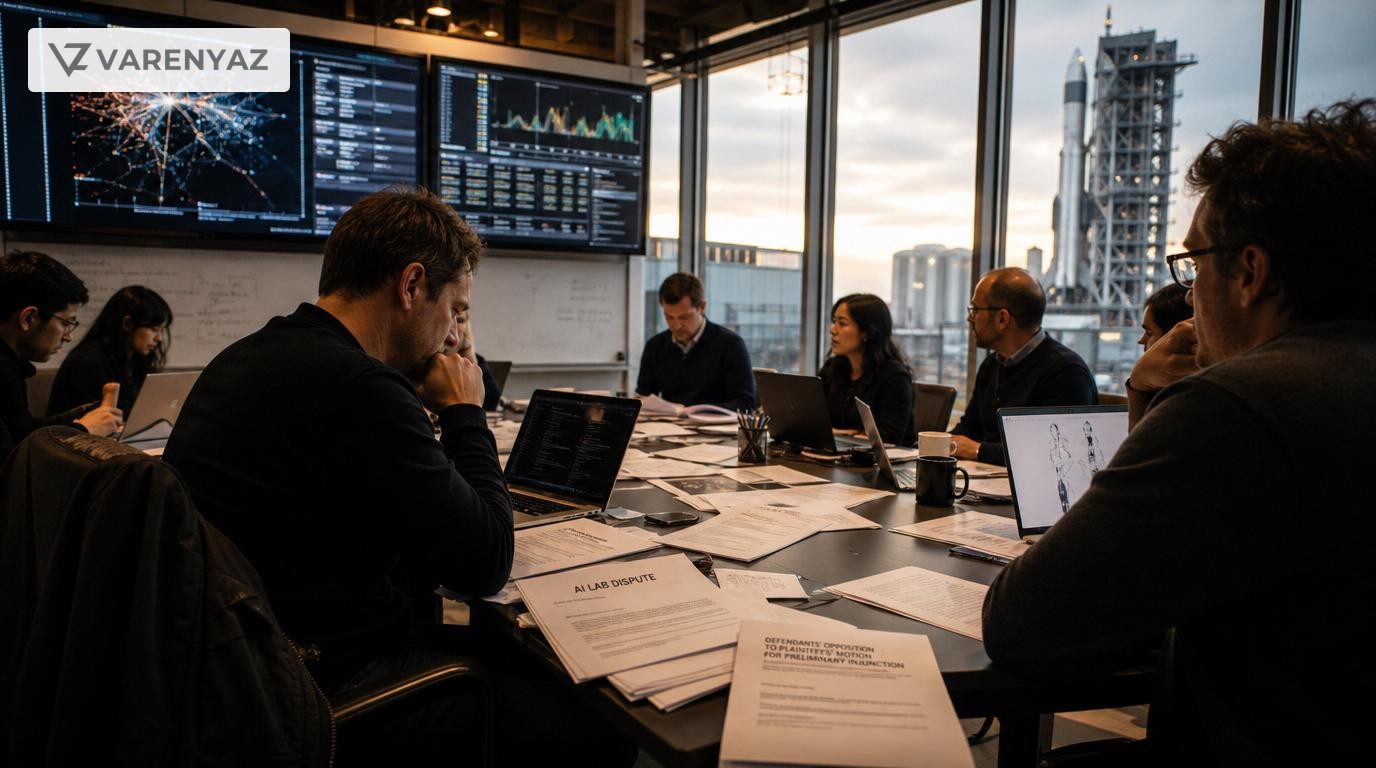
The Musk–OpenAI trial has ended, but it crystallized a deeper question: who should we trust to govern frontier AI systems? The case revolved around whether OpenAI shifted from a non-profit, open ecosystem vision to a more closed, profit-driven structure. For leaders, the key issues are AI governance, concentration of power, transparency, and how future regulation and IPOs around AI and adjacent companies like SpaceX could reshape competition, safety standards, and access to advanced models.
News Desk
LiveEditorial Review
VarenyaZ Editorial Desk, Managing Editor
Global
In This Story
Coverage Signals
Key Takeaways
- The Musk–OpenAI trial has wrapped up, but it amplified a broader debate about who controls and governs frontier AI systems.
- Arguments focused less on code and more on mission drift, openness, and whether AI labs can be trusted to prioritize safety over profit.
- In parallel, SpaceX is heading toward a potential mega-IPO, reinforcing how much power a small group of founders holds across AI and space infrastructure.
- Enterprise AI buyers must evaluate not only model performance but also governance, safety practices, and long-term platform alignment.
- Regulators in the US, UK, and EU are likely to use this high-profile dispute as context for future AI accountability and disclosure rules.
- Founders building AI-native products should prepare for a world of tighter reporting, model labeling, and contractual commitments on safety.
- Investors will increasingly price in governance risk when backing AI labs and infrastructure companies tied to influential founders.
- VarenyaZ can help teams design robust AI architectures and governance-aware platforms that remain adaptable as regulations and partnerships shift.
Musk–OpenAI trial ends, but the trust question remains
The formal proceedings in the Musk–OpenAI trial have wrapped up. What lingers is not just a legal dispute between a billionaire founder and an AI lab, but a sharper question for every board and leadership team: who should we trust to govern frontier AI as it becomes embedded in the global economy?
Across closing arguments and public commentary, one theme kept resurfacing: has OpenAI shifted too far from its original mission of broadly beneficial, open AI toward a tightly controlled, profit-focused platform? And if so, what does that signal about how the next generation of AI labs will behave once their models become critical infrastructure?
What actually happened in the Musk–OpenAI saga
Elon Musk was a co-founder and early backer of OpenAI, helping to launch it as a research organization positioned as a counterweight to tech giants dominating AI. Over time, OpenAI evolved into a capped-profit structure, took large strategic investment, and commercialized products like ChatGPT and its API.
The legal dispute centered on whether OpenAI had drifted from its original commitments and whether Musk was misled or disadvantaged as the organization changed shape. While the precise legal outcome now moves into the domain of judges and court documents, the public debate has already delivered its verdict: the world is uneasy about how much power a handful of founders and labs now wield over AI’s direction.
That anxiety is amplified by the fact that at the same time this trial has unfolded, Musk’s other company, SpaceX, has surged toward what could become one of the largest US IPOs in history, with its Starlink network and launch capabilities now embedded in both commercial and national security infrastructure.
Why this matters far beyond Musk and Altman
For founders, CTOs, investors, and policy teams, the core issue is not personality drama. It is the concentration of control over models that shape markets, information flows, and in time, entire industries.
Three risks are converging:
- Mission drift at AI labs: Organizations that start with broad public-benefit charters can be pulled toward closed, monetized products as model training costs and investor expectations rise.
- Opaque governance structures: Many frontier labs operate through layered entities and boards, making it difficult for outsiders to understand who truly controls model release decisions.
- Systemic dependency: Enterprises are rapidly building on a small number of AI platforms, turning those labs into potential single points of failure or policy risk.
The Musk–OpenAI trial turned these abstract concerns into a concrete narrative. Even if OpenAI’s formal structure and charter remain intact, the public dispute has accelerated calls for clearer guardrails on AI governance.
SpaceX, IPOs, and the “founder machine” effect
Running in parallel to the trial is another storyline: SpaceX’s growth and its path toward a possible blockbuster IPO. Together, these stories highlight how a small circle of founder-led companies now exerts outsized influence over both the digital and physical infrastructure of the 21st century.
SpaceX controls launch capacity and a global communications network via Starlink. OpenAI sits at the center of generative AI adoption, shaping products from chatbots and copilots to AI agents and automation workflows. For investors and regulators, this raises a fundamental question: are current governance models adequate for organizations whose decisions can tilt global markets or geopolitical dynamics?
For a new generation of founders spinning out of such firms, the signal is powerful. They see that aggressive scaling, platform control, and bold narrative-setting can create enormous leverage. The open issue is whether that leverage will be balanced by equally strong governance and accountability mechanisms.
Business impact: AI platform choice is a governance decision
For business leaders, the immediate decision is not which side to support in a courtroom. It is how to respond to the structural risk that this dispute exposes.
Key implications include:
- Platform dependency risk: Relying on a single AI provider can expose teams to sudden shifts in pricing, terms of use, or model behavior driven by internal boardroom decisions rather than customer needs.
- Procurement and compliance complexity: Legal, security, and compliance teams will increasingly scrutinize AI vendors’ governance, data policies, and reporting practices as part of enterprise procurement.
- Reputational spillover: Any major controversy around how an AI lab handles safety, alignment, or data could quickly impact enterprises that have tightly integrated those models into customer-facing experiences.
In this environment, AI architecture and vendor strategy become board-level topics. Leaders should be pushing for clear documentation of where AI is used, which vendors are critical, and what the contingency plans are if a key platform changes course.
AI, search, and software: how this shapes the next wave
The Musk–OpenAI dispute lands at a moment when generative AI is reshaping search, software development, and automation.
- Search and AI overviews: As search engines roll out AI overviews and answer-engine experiences, OpenAI and its peers are influencing how information is summarized and prioritized. Governance choices at these labs indirectly affect information ecosystems worldwide.
- Developer ecosystems: Developers are building products atop AI APIs much like they did with early mobile or cloud platforms. If governance is unstable, that entire ecosystem inherits the volatility.
- Automation and agents: As companies move from chatbots to AI agents that can act on systems, the trustworthiness and traceability of model decisions become more critical than ever.
This is not just a moral or philosophical concern; it is a product, architecture, and risk-management concern. The software you ship tomorrow will be judged not only on features, but also on how responsibly its underlying AI behaves.
Regulatory and governance outlook
Regulators in the US, UK, EU, and beyond are watching high-profile cases like this closely. While the trial itself may not directly trigger new rules, it reinforces several regulatory trends:
- Mandatory disclosure: Expect pressure for clearer disclosures on AI capabilities, training data sources, and safety approaches for frontier models.
- Accountability frameworks: Boards may be required to take explicit responsibility for AI risk management and to document oversight mechanisms.
- Competitive concerns: Regulators may scrutinize whether concentration of AI capabilities in a few labs distorts competition in downstream markets like search, productivity tools, and developer platforms.
For enterprises in India, the US, the UK, and other active tech hubs, this means AI strategies must be designed with regulatory adaptability in mind. Compliance cannot be bolted on later; it has to be embedded in architecture and governance from the start.
What founders, CTOs, and investors should do now
The trial may be over, but the governance era of AI is just beginning. Practical steps leaders can take today include:
- Map AI dependencies: Build an inventory of where and how your organization uses third-party AI models and APIs.
- Adopt multi-model strategies: Where feasible, design applications to support multiple AI providers or interchangeable models via abstraction layers.
- Strengthen data and audit trails: Ensure you can explain, at least at a policy level, how AI-driven decisions are made and how data is handled.
- Align contracts to risk: Negotiate service agreements that address uptime, model changes, incident response, and data guarantees.
- Build an internal AI governance framework: Define policies for acceptable use, human oversight, and monitoring of AI systems in production.
If your team needs to rethink AI architecture, governance, or automation strategy, you can start a focused conversation with VarenyaZ at https://varenyaz.com/contact/.
How VarenyaZ fits into an AI governance-aware strategy
VarenyaZ works with organizations to translate AI ambition into resilient, production-grade systems. That includes:
- Custom web and app development that integrates AI responsibly into user experiences, with clear data flows and oversight.
- AI architecture and platform design that avoids over-dependence on a single vendor and enables model flexibility over time.
- Workflow automation and agents built with governance in mind, ensuring that human review, logging, and control points are in place.
- Search, analytics, and decision support tools that leverage generative AI while maintaining transparency and auditability.
Conclusion: Beyond the verdict, toward durable AI trust
The Musk–OpenAI trial will eventually be remembered more for the governance questions it raised than for its legal technicalities. As AI becomes woven into search, software, infrastructure, and everyday business operations, trust will depend on more than model performance. It will hinge on how transparently labs operate, how responsibly founders wield their power, and how carefully enterprises architect their dependencies.
VarenyaZ helps businesses move from reactive experimentation to deliberate, governance-aware AI adoption—through thoughtful web design, robust web and app development, automation, and custom AI solutions engineered for a future where trust, transparency, and resilience matter as much as speed.
Editorial Perspective
"The Musk–OpenAI trial may end with a legal ruling, but the governance questions it surfaced will echo across every boardroom buying or building on frontier AI."
"For enterprises, the key lesson is that AI risk is no longer just technical; it is fundamentally about who controls the models, how incentives are set, and whether governance can keep up with scale."
Frequently Asked Questions
What is the core issue highlighted by the Musk–OpenAI trial?
Beyond legal claims, the Musk–OpenAI trial highlighted a deeper tension between nonprofit-style, open AI development and closed, commercial AI labs. It raised questions about whether AI leaders can be trusted to prioritize safety, transparency, and long-term public benefit when powerful models become central to business and national competitiveness.
How does this trial affect business decisions about using OpenAI or similar AI platforms?
The trial underscores that platform choice is also a governance choice. Enterprises relying on OpenAI or similar providers should assess contractual protections, auditability, data handling, model versioning, and exit options. Leaders need to treat AI platforms as strategic dependencies, not just APIs, and design architectures that avoid single points of failure.
Why is SpaceX mentioned in the context of the OpenAI trial?
SpaceX is part of the same founder ecosystem, and it is reportedly moving toward what could be one of the largest US IPOs in history. The contrast is stark: while OpenAI’s governance is contested, SpaceX is consolidating capital-market power. Together, they show how a small set of founders shape critical infrastructure in AI and space.
What should startup founders building AI products take away from this dispute?
Founders should assume that AI governance, safety policies, and data stewardship will become part of due diligence, enterprise procurement, and regulation. Building clear documentation, audit trails, and transparent model policies now can prevent future friction with regulators, partners, and customers as scrutiny intensifies.
How can companies reduce risk when integrating frontier AI models?
Companies can reduce risk by adopting multi-model strategies, API abstraction layers, and internal policy frameworks for data use, human oversight, and AI outputs. This includes vendor diversification, strong security controls, and governance-aligned product design. Working with an experienced partner like VarenyaZ can accelerate this process.
Selected References
Stay Ahead
Get concise, actionable insights on AI, digital strategy, and innovation. No spam, just value.
More Coverage
Related News
Jun 29, 2026
Pocket Bets on AI Note-Taking Hardware With New $11M Round
Pocket, a startup building a $129 credit card-shaped AI note-taking device that sticks to the back of a smartphone, has raised $11 million to scale production and software. The puck offers continuous audio capture, unlimited recordings, transcription and task extraction, targeting professionals who live in meetings and conversations. The round underscores investor confidence in dedicated AI hardware and ambient computing, while raising new questions for IT leaders about privacy, compliance, device management and how such tools will integrate with existing SaaS stacks and custom applications.
Jun 28, 2026
SpaceX Veteran Turns Rocket Engines Into Geothermal Power
Critical Energy, founded by a former SpaceX engineer, has secured a major funding round to repurpose rocket engines for ultra-deep geothermal drilling. By reaching hotter rock layers, the startup aims to provide firm, low-carbon baseload power that can compete with fossil fuel plants. The approach could be attractive for utilities, data centers, and heavy industry seeking 24/7 clean energy. Key questions now are drilling costs, regulatory paths, and how fast power purchase agreements and pilot plants can scale from demonstration to commercial deployment.
Jun 27, 2026
OpenAI’s Jalapeño AI chip turns up heat on Nvidia’s dominance
OpenAI is developing Jalapeño, a custom AI inference chip built with Broadcom, as part of a broader effort to reduce its dependence on Nvidia GPUs. The move aligns OpenAI with Google, Apple, Amazon, Meta, and Tesla, all investing in in‑house silicon. For businesses, Jalapeño highlights a shift toward vertically integrated AI stacks that optimize for cost, latency, and energy efficiency. Leaders should not expect to buy Jalapeño directly soon, but its existence will influence cloud pricing, AI performance baselines, and long‑term hardware strategy.