
Performance Engineering for Transport & Logistics
Learn how performance engineering transforms transportation and logistics with data, automation, and AI to boost reliability, efficiency, and customer experience.

Quick Answer
Performance engineering gives transportation and logistics leaders a systematic way to improve reliability, speed, and cost. By combining data, simulation, automation, and AI, teams can optimize fleets, routes, warehouses, and multimodal flows end-to-end. This article breaks down key concepts, metrics, architecture layers, and implementation phases, then examines practical use cases such as real-time ETA accuracy, predictive maintenance, capacity planning, and digital twins. It closes with governance, risk, and talent considerations, plus how partners like VarenyaZ can help design high-performance web, data, and AI platforms.
In this article
Coverage signals
14 min
Jun 2, 2026
VarenyaZ Editorial Desk, Technical Content Review
Updated Jun 2, 2026
Key Takeaways
- Performance engineering turns fragmented transport and logistics operations into a measurable, optimizable end-to-end system.
- The most effective programs start with a small set of shared business metrics like on-time performance, cost per shipment, and ETA accuracy.
- A layered architecture with strong observability is essential to link vehicle, warehouse, and application performance to business outcomes.
- AI and advanced analytics amplify value through dynamic routing, predictive maintenance, anomaly detection, and capacity planning.
- Digital twins and scenario testing help leaders evaluate tradeoffs before changing routes, SLAs, or network design in production.
- Governance, change management, and clear ownership are as important as algorithms or tools in sustaining performance gains.
- Modern web, data, and AI platforms are the backbone of performance engineering initiatives in transport and logistics.
- Specialist partners like VarenyaZ can accelerate design, implementation, and scaling of performance-focused digital systems.
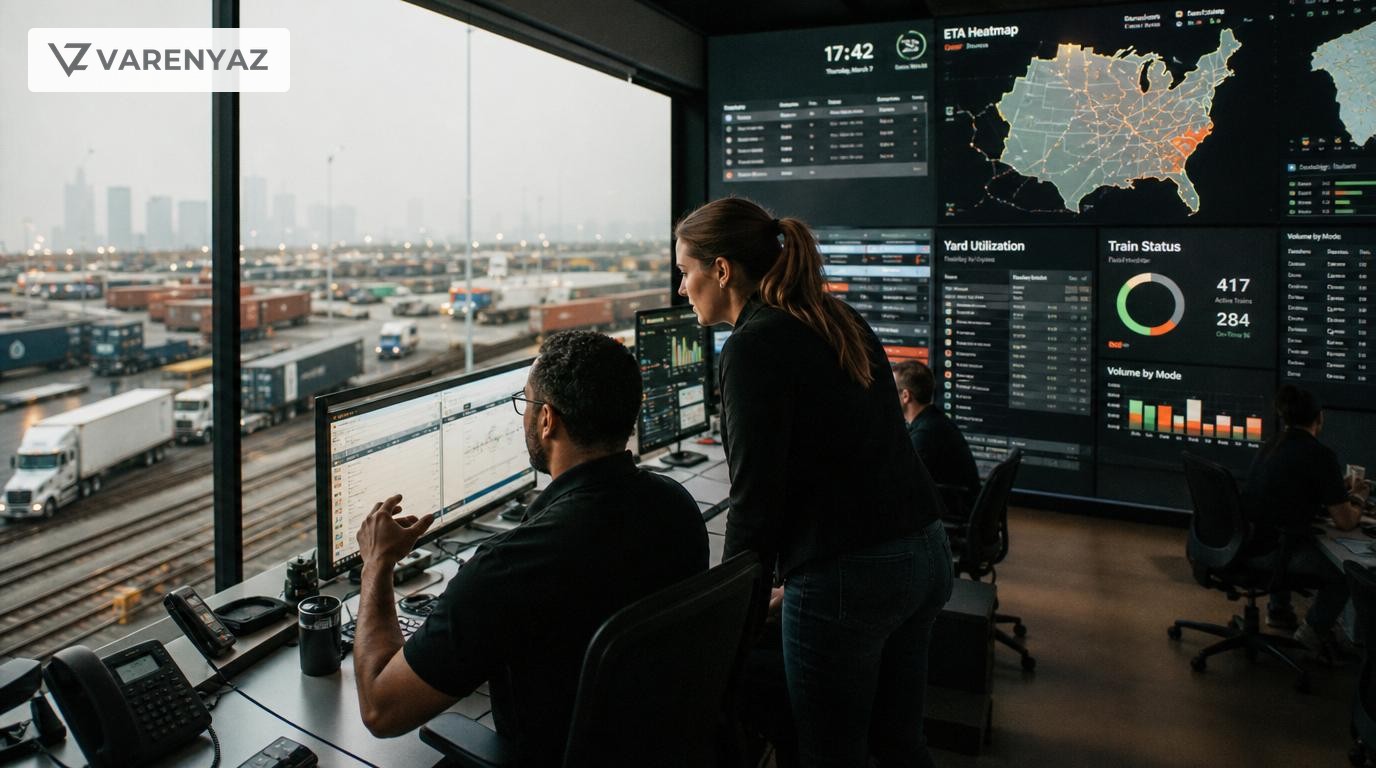
Exploring Performance Engineering: A Pathway to Enhanced Transportation & Logistics
Why transportation and logistics need performance engineering now
Transportation and logistics are under more pressure than ever. Customers expect same-day delivery, real-time tracking, and accurate ETAs. Fuel and labor costs keep climbing. Networks are more complex, spanning road, rail, air, and ocean, with partners and third-party platforms in the mix.
For many organizations, the default response has been to add more tools: another routing engine, another dashboard, another TMS module. Yet delays persist, ETAs slip, and operations teams stay stuck in firefighting mode.
Performance engineering offers a different way forward. Instead of treating problems in isolation, it looks at your entire transport and logistics ecosystem—software, vehicles, warehouses, data, and people—as one system that can be measured, modeled, and continuously improved.
Direct answer: what is performance engineering in transportation and logistics?
Performance engineering in transportation and logistics is a disciplined approach to designing, measuring, and improving how your network performs under real-world conditions. It connects business outcomes (like on-time delivery and cost per shipment) to technical and operational levers (like routing, capacity, API reliability, and warehouse throughput), using data, testing, automation, and AI to optimize the whole system.
Instead of just asking “Is the server fast?” or “Is the route shortest?”, performance engineering asks, “Are we reliably delivering at the right service level, cost, and speed—and what must change in our network to do better?”
The business case: from firefighting to orchestrating the network
From local fixes to network-level outcomes
Traditional optimization often stays local: a better route on one lane, a faster API endpoint, a slightly more efficient picking process. These matter, but they rarely change the game by themselves.
Performance engineering shifts the goal from local efficiency to network performance. It is about orchestrating how fleets, warehouses, software, and partners behave together to consistently deliver on:
- On-time pickup and delivery
- Reliable, accurate ETAs
- Cost per shipment and per lane
- Fleet and asset utilization
- Customer satisfaction and retention
Key business benefits
When done well, performance engineering can unlock a step-change in operational performance, not just incremental gains. Typical benefits include:
- Higher on-time performance through better routing, dynamic re-planning, and proactive exception handling.
- Improved ETA accuracy, which directly reduces “Where is my order?” contacts and boosts customer trust.
- Lower cost per shipment via better capacity utilization, fewer empty miles, and more predictable operations.
- Reduced downtime from predictive maintenance and faster incident resolution, especially for fleets and critical systems.
- More resilient networks that can absorb demand spikes, disruptions, and weather events without chaos.
At a macro level, performance engineering aligns operational teams, technology teams, and commercial leaders around the same measurable outcomes, turning logistics from a cost center into a strategic differentiator.
Core pillars of performance engineering for logistics
1. Clear, shared performance objectives
Everything starts with what “good” looks like for your business. Without shared objectives, technical and operational teams optimize for different things—and often work against each other.
Common top-level metrics include:
- On-time pickup (OTP) and on-time delivery (OTD)
- ETA accuracy (difference between promised and actual time)
- Cost per shipment or per delivered unit
- Vehicle and container utilization
- Warehouse throughput (lines or units per hour)
- Order cycle time (click to door)
- Incident rate (failed deliveries, claims, safety events)
The real power comes when these are codified into service tiers and SLAs—so routing, scheduling, and capacity decisions can be made in context, not in isolation.
2. End-to-end observability: seeing what the network is actually doing
You can’t engineer performance you can’t see. Observability goes beyond GPS pings and basic track-and-trace. It means stitching together signals across:
- Fleets and assets: GPS, telematics, engine health, fuel usage, driver behavior.
- Warehouses and hubs: scan events, queue times, picking and packing cycle times, dock utilization.
- Digital systems: API latency, error rates, page load times for customer and partner portals, TMS/WMS performance.
- Business events: orders, cancellations, re-attempts, claims, customer tickets.
Performance engineering programs often start by building a unified data layer or event stream that combines these signals and makes them queryable in near real time.
3. Design for scale, variability, and failure
Logistics networks run in hostile conditions: traffic, weather, holidays, promotions, labor shortages, and supplier disruptions. Performance engineering assumes variability and failure, and designs with them in mind.
Core practices include:
- Load and stress testing for core platforms (TMS, OMS, customer apps) ahead of predictable peaks.
- Chaos and failure testing, such as simulating API outages or hub closures to see how the network reroutes.
- Scenario modeling for different demand patterns, fuel prices, and service levels.
- Graceful degradation, where non-critical features are throttled before core services fail.
4. Feedback loops and automation
Performance engineering is not a one-time project. It lives or dies based on feedback loops—how quickly the system can detect issues, learn from them, and adjust.
- Monitoring and alerting for critical KPIs and anomalies, such as sudden dwell time spikes at a hub.
- Automated responses, like automatic re-routing when a carrier misses a pickup window.
- Continuous improvement cycles, where incident postmortems and performance reviews feed back into routing rules, capacity plans, and software changes.
A practical architecture for performance engineering
Layer 1: Data and integration
At the base is a robust data and integration layer. Transportation and logistics data is often siloed across legacy systems, spreadsheets, third-party carriers, and IoT devices. Performance engineering requires:
- Standardized data models for shipments, stops, assets, and events.
- Streaming pipelines to ingest telematics, scan events, and app logs in near real time.
- APIs and integration hubs that connect TMS, WMS, ERP, customer portals, and partner systems.
- Secure data governance with access controls, retention policies, and compliance standards like ISO 27001.
Layer 2: Observability and monitoring
On top of this data layer, observability tools transform raw events into actionable insights:
- Real-time dashboards for OTP/OTD, ETA accuracy, active exceptions, and network heatmaps.
- Tracing and logging from digital systems to understand how user actions impact physical flows.
- Performance baselines that define “normal” by lane, time of day, or season.
- Alerting rules that combine technical signals (API latency) with operational indicators (orders backing up).
Layer 3: Analytics, modeling, and AI
Once you can observe the system, you can start to optimize it using analytics and AI:
- Forecasting models for demand, volume per lane, and hub workload.
- Dynamic routing and dispatch that consider traffic, priorities, capacity, and SLAs in real time.
- Predictive maintenance models that flag vehicles at higher risk of breakdowns and propose optimal service windows.
- Anomaly detection that spots unusual patterns in dwell times, mileage, or incident rates.
These models feed both operational decisions (today’s routing) and strategic decisions (network design, fleet size, and mix).
Layer 4: Action and orchestration
The top layer turns insights into action:
- Rules engines that encode business logic for routing, carrier assignment, or capacity allocation.
- Workflows and automations that trigger tasks for dispatch, customer care, or warehouse teams.
- High-performance web and mobile apps for planners, drivers, partners, and customers to see and act on real-time data.
- APIs and webhooks that push updated ETAs, capacity information, or exceptions into partner systems.
Key metrics: linking technical performance to business outcomes
Operations metrics
The starting set of metrics should be small but meaningful. Common operations metrics include:
- On-time pickup & delivery (OTP/OTD): percentage of loads meeting promised windows.
- ETA accuracy: average deviation between predicted and actual times.
- Vehicle utilization: percentage of time or capacity actually used.
- Dwell and wait times: at shippers, hubs, cross-docks, and receivers.
- Warehouse throughput: per shift or per square meter.
- Incident and re-delivery rate: failed or problematic deliveries.
Technical and digital metrics
Technical metrics reflect how digital systems underpinning logistics are performing:
- API latency and availability for TMS, tracking, rate shopping, and booking.
- Page and app load times for customer and driver apps.
- Error rates and timeouts that can cause broken tracking or lost updates.
- Data freshness for tracking and inventory views.
The crucial step is to connect these to business outcomes—for example, correlating tracking API latency with customer contact volume, or app crashes with missed scans and ETA errors.
Where AI and advanced analytics create leverage
1. ETA prediction and customer experience
Accurate, trustworthy ETAs are one of the most visible signs of performance for customers. Modern AI models can incorporate:
- Historical journey times by lane, time of day, and season.
- Real-time traffic, weather, and incident data.
- Stop-level patterns like typical dwell times at specific locations.
This can yield more realistic ETAs and better dynamic updates. Over time, AI-driven ETA systems can become a core asset, reducing support costs and improving loyalty.
2. Dynamic routing and dispatch
Instead of static morning plans, performance engineering promotes dynamic routing: adjusting assignments and sequences throughout the day as reality unfolds.
Routing engines enhanced by AI can factor in:
- Road and traffic conditions.
- Service-tier priorities (express vs standard).
- Driver hours-of-service constraints and skills.
- Vehicle characteristics and access constraints.
The performance challenge is not only finding the "best" route but doing it fast enough, reliably, and at the scale of thousands of vehicles and tasks.
3. Predictive maintenance for fleets
Vehicle breakdowns destroy performance: missed deliveries, emergency rerouting, and stranded drivers. Historical and real-time telematics can be used to predict which vehicles are at higher risk of failure and schedule maintenance before they break down.
When integrated into planning systems, predictive maintenance can help balance fleet availability and service schedules, maintaining both reliability and utilization.
4. Capacity planning and network design
Performance engineering is as much about the future as the present. Forecasting models can estimate:
- Expected volume by lane, region, or customer.
- Required capacity (vehicles, containers, staff) to maintain service levels.
- When a hub or cross-dock will become a bottleneck.
These models inform decisions on new depots, mode shifts, or collaborations, turning capital expenditure into a controlled, data-backed choice rather than guesswork.
Digital twins: a safe sandbox for your network
What a logistics digital twin looks like
A digital twin is a virtual model of your logistics network—routes, hubs, fleets, and flows—that mirrors the real world using live and historical data. With it, you can:
- Simulate changes to routes, schedules, and hubs.
- Test new service levels or SLAs.
- Predict the impact of disruptions like road closures or strikes.
Global logistics players are increasingly turning to digital twins to validate decisions before deploying them, reducing the risk of costly mistakes.
Using digital twins for performance engineering
Performance engineering uses digital twins as a testing ground for:
- Peak readiness: Will your systems and network hold under holiday or festival surges?
- Network redesign: What happens to service and cost if you add or remove a hub?
- Policy changes: How will new delivery promises or cut-off times affect capacity and on-time performance?
By experimenting in the twin, teams can quantify tradeoffs—like how much extra capacity is needed to raise on-time performance from 93% to 97%—before making real-world commitments.
Implementation playbook: how to get started
Step 1: Clarify scope and outcomes
Start with a sharp, limited focus. Examples:
- Improve ETA accuracy for last-mile deliveries in one city.
- Reduce dwell time at a specific high-volume hub.
- Increase first-attempt delivery rates for a priority customer segment.
Define baseline metrics and what success would look like over 6–12 months.
Step 2: Map systems, data, and flows
Next, map how work actually flows today:
- Which systems touch the process (TMS, WMS, CRM, apps)?
- Where are the data gaps—unscanned events, untracked assets, shadow spreadsheets?
- Where do handoffs fail between teams or partners?
This map becomes your reference for where observability and improvements are most needed.
Step 3: Build minimal observability
You don’t need a perfect platform to begin. Start by instrumenting the most critical points:
- Ensure every key event (pickup, sort, departure, arrival, attempt, delivery) is captured digitally.
- Consolidate event data into a simple store or stream.
- Expose a basic operations dashboard focusing on your target metrics.
This foundation enables performance conversations grounded in data instead of anecdotes.
Step 4: Run targeted experiments
With baseline visibility, move into experimentation:
- A/B test different routing strategies on selected lanes.
- Deploy predictive alerts for dwell time anomalies at one hub.
- Introduce richer driver guidance in one region and track impact on ETAs.
Performance engineering favors iterative, evidence-based changes over big-bang transformations.
Step 5: Institutionalize feedback loops
Create routines where data drives decisions:
- Weekly performance reviews combining technical and operations teams.
- Standard templates for incident postmortems and lessons learned.
- Shared OKRs or KPIs across engineering, product, and ops leaders.
Over time, this builds a culture where performance is everyone’s responsibility, not just the job of “the system” or a single team.
Risks, tradeoffs, and how to manage them
Data quality and trust
Performance engineering relies on trustworthy data. Incomplete scans, inaccurate GPS, or delayed updates can undermine modeling and erode confidence.
Mitigation strategies include:
- Clear scanning and data-entry standards, reinforced by training and metrics.
- Validation checks and alerts for obviously wrong values.
- Redundancy, such as combining GPS with network triangulation or manual exception flags.
Complexity vs. usability
More data and models can lead to overload. Dashboards no one checks and tools no one understands are a common failure mode.
To avoid this:
- Design interfaces around the workflows of dispatchers, planners, and drivers.
- Limit frontline views to a small set of actionable metrics and alerts.
- Provide clear recommendations, not just raw charts.
Over-automation and brittleness
Automation improves speed and consistency, but over-automation can make systems brittle when edge cases arise.
Balance is key:
- Keep humans in the loop for high-impact decisions or unusual scenarios.
- Make it easy to override system decisions, with reasons captured for learning.
- Test automated rules extensively in sandbox and limited pilots before broad rollout.
Talent and organizational change
Performance engineering often alters how teams work. Operations managers may rely more on data, dispatch decisions may shift from gut feel to recommendations, and IT teams may need new skills in data, AI, and observability.
Successful programs invest in:
- Training frontline users on new tools and metrics.
- Creating cross-functional squads for key performance initiatives.
- Recognizing and rewarding performance improvements, not just firefighting heroics.
Geo realities: India, United States, and United Kingdom
India: scale and volatility
In India, hyper-growth in e-commerce and urbanization has created dense, complex last-mile challenges. Traffic variability, infrastructure constraints, and festival peaks make performance engineering particularly valuable.
Here, investments often focus on:
- Route optimization for dense and dynamically changing cities.
- Cash and COD flows integrated into performance metrics.
- Mobile-first tools for drivers and field staff.
United States: network scale and multi-modal operations
In the US, vast distances, multi-modal networks, and a fragmented carrier landscape mean performance engineering must unify data from many partners and modes—truckload, LTL, intermodal, parcel, and air.
High-value use cases include:
- Digital twins of regional or national networks.
- Carrier performance benchmarking and dynamic allocation.
- Advanced capacity planning and equipment positioning.
United Kingdom: congestion, regulation, and sustainability
In the UK, dense urban areas, environmental regulations, and tight delivery windows drive a focus on both performance and sustainability.
Performance engineering efforts often prioritize:
- Urban delivery consolidation and micro-fulfilment optimization.
- Integrating low-emission zones and restrictions into routing engines.
- Balancing cost, service, and emissions as co-equal performance goals.
Web, AI, and platform foundations for performance engineering
Why your web and digital experience layer matters
Performance engineering is not only about back-end algorithms; it is also about how people interact with the system. Dispatchers, planners, drivers, partners, and customers all rely on web and mobile interfaces to see status, make decisions, and intervene.
High-performance digital experiences are essential to:
- Surface real-time performance metrics in intuitive dashboards.
- Give drivers clear, safe guidance and simple exception tools.
- Enable customers to self-serve for tracking and re-scheduling, reducing support load.
- Provide leadership with aggregated, trustworthy performance insights.
The role of AI development and integration
AI and machine learning are central to modern performance engineering, but they must be thoughtfully integrated into your tech stack. That means:
- Choosing use cases where AI can add clear, measurable value (ETAs, predictions, routing, anomaly detection).
- Designing APIs and services around models so they can be safely called from TMS, apps, and dashboards.
- Setting up monitoring for model performance, drift, and fairness.
Most organizations benefit from partnering with experienced AI developers to balance ambition with robustness and governance.
How VarenyaZ can support your performance engineering journey
Designing high-performance digital logistics systems
VarenyaZ specializes in web design, web development, and AI development for businesses that run on complex operations like transportation and logistics. Our teams help you:
- Design intuitive, role-based dashboards and portals that surface the right performance data for each user.
- Build web and mobile applications that are resilient, fast, and scalable under real-world logistics loads.
- Create integration layers and APIs that connect TMS, WMS, CRM, telematics, and partner systems into a cohesive platform.
Embedding AI and analytics where they matter
We work with you to identify high-impact AI use cases—such as ETA prediction, anomaly detection, and predictive maintenance—and then:
- Design and train models on your data, with strong MLOps practices.
- Integrate AI services into your existing tools and workflows.
- Build explainable interfaces so teams can trust and audit model-driven decisions.
From concept to continuous performance improvement
Beyond initial builds, VarenyaZ supports continuous performance engineering through:
- Performance audits of your current digital and data landscape.
- Incremental rollout of observability, automation, and AI capabilities.
- Co-creating roadmaps with your operations and technology leaders.
If you are ready to explore how performance engineering can reshape your transportation and logistics operations, connect with the VarenyaZ team at https://varenyaz.com/contact/.
Conclusion: from moving goods to engineering performance
Transportation and logistics will only grow more demanding and interconnected. Performance engineering offers a systematic way to move from reactive problem-solving to proactive orchestration—backed by data, observability, and intelligent automation.
By investing in the right metrics, architecture, and culture, leaders can build networks that are not just faster or cheaper, but more reliable, transparent, and resilient. And with partners like VarenyaZ, you can anchor that transformation in robust web design, scalable web development, and practical AI development that turn performance engineering from a strategy deck into an everyday operating reality.
Editorial Perspective
Expert Review Notes
"In modern logistics, performance engineering is less about squeezing one route or warehouse and more about orchestrating an entire network so that every decision is informed by real-time data."
"Leaders who treat observability, simulation, and AI as core capabilities—rather than optional add-ons—are the ones turning transportation networks into durable competitive advantages."
"Performance engineering succeeds when technology, operations, and commercial teams share the same scorecard and use it to guide day-to-day and strategic choices."
Frequently Asked Questions
What is performance engineering in transportation and logistics?
Performance engineering in transportation and logistics is a structured approach to designing, measuring, and improving how your network behaves under real operating conditions. It combines metrics, observability, testing, automation, and AI to optimize reliability, speed, capacity, and cost across fleets, warehouses, and digital systems.
How is performance engineering different from traditional process optimization?
Traditional process optimization focuses on isolated workflows, like a single route or warehouse process. Performance engineering treats the entire transport and logistics ecosystem—software, vehicles, warehouses, and partners—as one integrated system. It adds continuous measurement, simulation, and automated feedback loops so improvements are ongoing rather than one-off.
Which metrics matter most for performance engineering in logistics?
Key metrics typically include on-time pickup and delivery rate, ETA accuracy, cost per shipment, vehicle utilization, dwell time, warehouse throughput, order cycle time, and incident rate. The right set depends on your business model, but they should connect directly to customer experience, revenue, and cost efficiency.
Where should a logistics company start with performance engineering?
Start by defining clear business outcomes, then instrument your most critical flows with basic observability: tracking, shipment status, and key app performance metrics. From there, run targeted pilots, such as improving ETA accuracy on a core lane or reducing dwell time in one warehouse, and gradually expand tooling, automation, and AI-driven optimization.
How can AI and digital twins support performance engineering in transport?
AI supports performance engineering by improving forecasting, dynamic routing, anomaly detection, and predictive maintenance. Digital twins simulate your logistics network, letting you test scenarios—like adding hubs or changing service levels—before implementing them in production, reducing risk and uncovering non-obvious bottlenecks.
How can VarenyaZ help implement performance engineering for logistics?
VarenyaZ helps by designing and building the digital foundations of performance engineering programs—high-performance web platforms, real-time data and integration layers, and applied AI solutions for routing, forecasting, and monitoring—so transportation and logistics teams can move from reactive firefighting to proactive performance management.
Selected References
Further Reading
Related perspectives
Legacy Modernization for Real Estate Growth
Legacy modernization in real estate means upgrading core property, leasing, and finance systems so they can support today’s digital, data-driven operations. It involves replacing or refactoring old software, consolidating data, and building a modern, API-first architecture. Done well, it improves decision-making, reduces manual work, and enables AI-driven use cases like dynamic pricing or predictive maintenance. This guide explains the business case, modernization options, risk controls, and practical steps real estate leaders can follow, and how a partner like VarenyaZ helps design and implement modern web, data, and AI solutions.
Future-Proofing Education with Predictive Analytics
Predictive analytics in education uses historical and real-time data to forecast learner outcomes, enrollment shifts, and operational needs so organizations can act early instead of reacting late. For business and product leaders, it unlocks targeted interventions, adaptive learning, smarter resource allocation, and more resilient revenue models. This article explains core use cases, required data foundations, technical architecture, governance, and ethical risks. It outlines build-versus-buy decisions and a phased roadmap so EdTech firms, universities, and training providers can implement predictive systems that actually ship, scale, and demonstrably improve student success.
Performance Engineering for Modern Manufacturing
Performance engineering in manufacturing is the discipline of designing plants, processes, and digital systems to consistently hit throughput, quality, cost, and reliability targets. It combines OT and IT data, real-time monitoring, analytics, and AI to expose bottlenecks and drive continuous improvement. This article explains core concepts, key metrics, target architecture, and implementation patterns, with examples like predictive maintenance, digital twins, and energy optimization. It also covers governance, risks, and vendor choices, then outlines a pragmatic roadmap and how VarenyaZ supports manufacturers with web, data, and AI solutions.